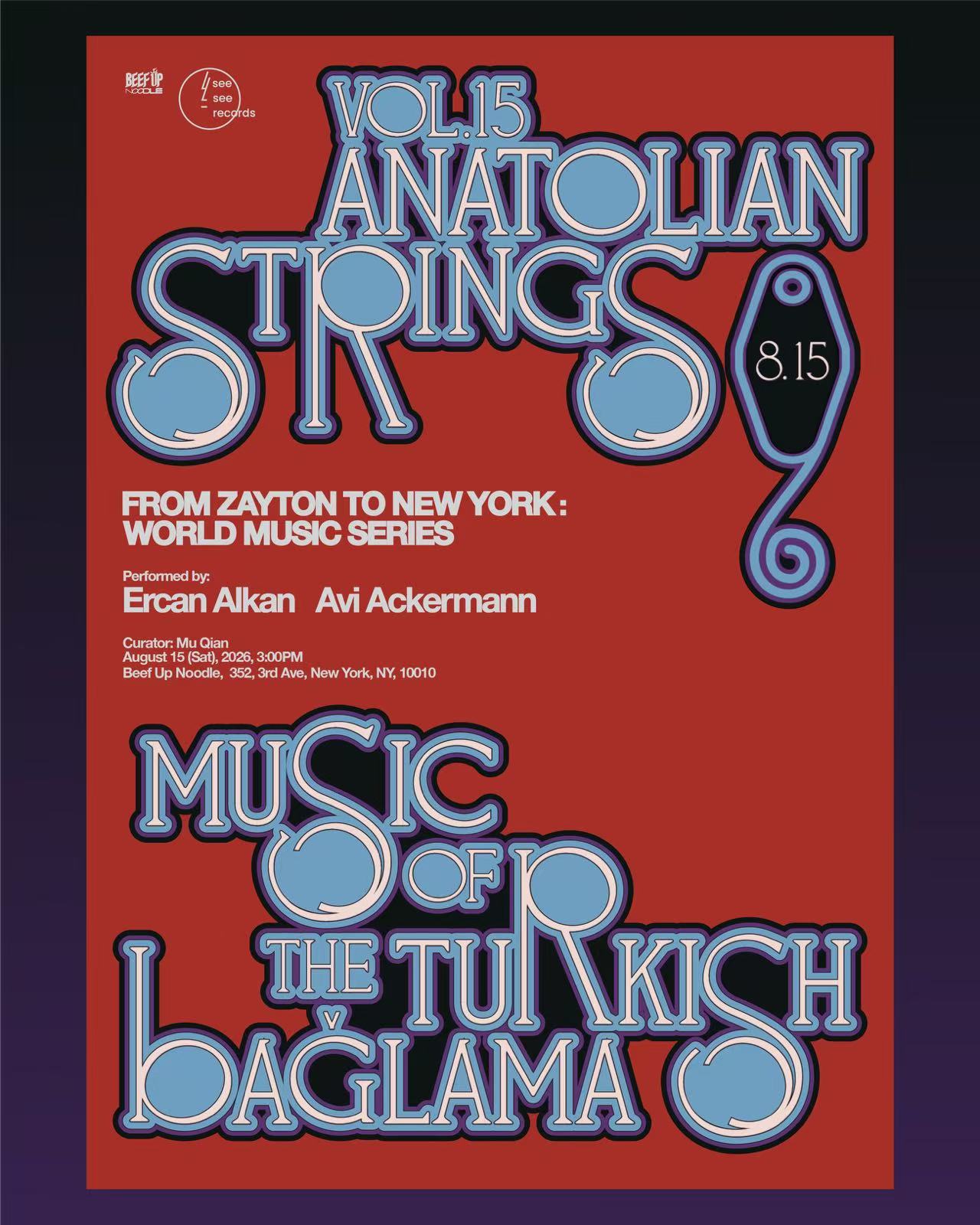
From Zayton to New York · Vol. 15
Anatolian Strings: Music of the Turkish Bağlama
- Date
- Saturday, August 15, 2026
- Time
- 3:00 PM
- Venue
- Beef Up Noodle
352 3rd Ave, New York, NY 10010 - With
- Ercan Alkan, Avi Ackermann
- Presented by
- See See Records & Center for Traditional Music and Dance
Co-presented with
We are proud to partner with the Center for Traditional Music and Dance to co-present From Zayton to New York concert series featuring New York-based immigrant artists.
To learn more about the Center for Traditional Music and Dance visit: www.ctmd.org.
CTMD's funders
This program is presented with the support of the Laurie M. Tisch Illumination Fund, the Howard Gilman Foundation, and the Samuels Foundation.
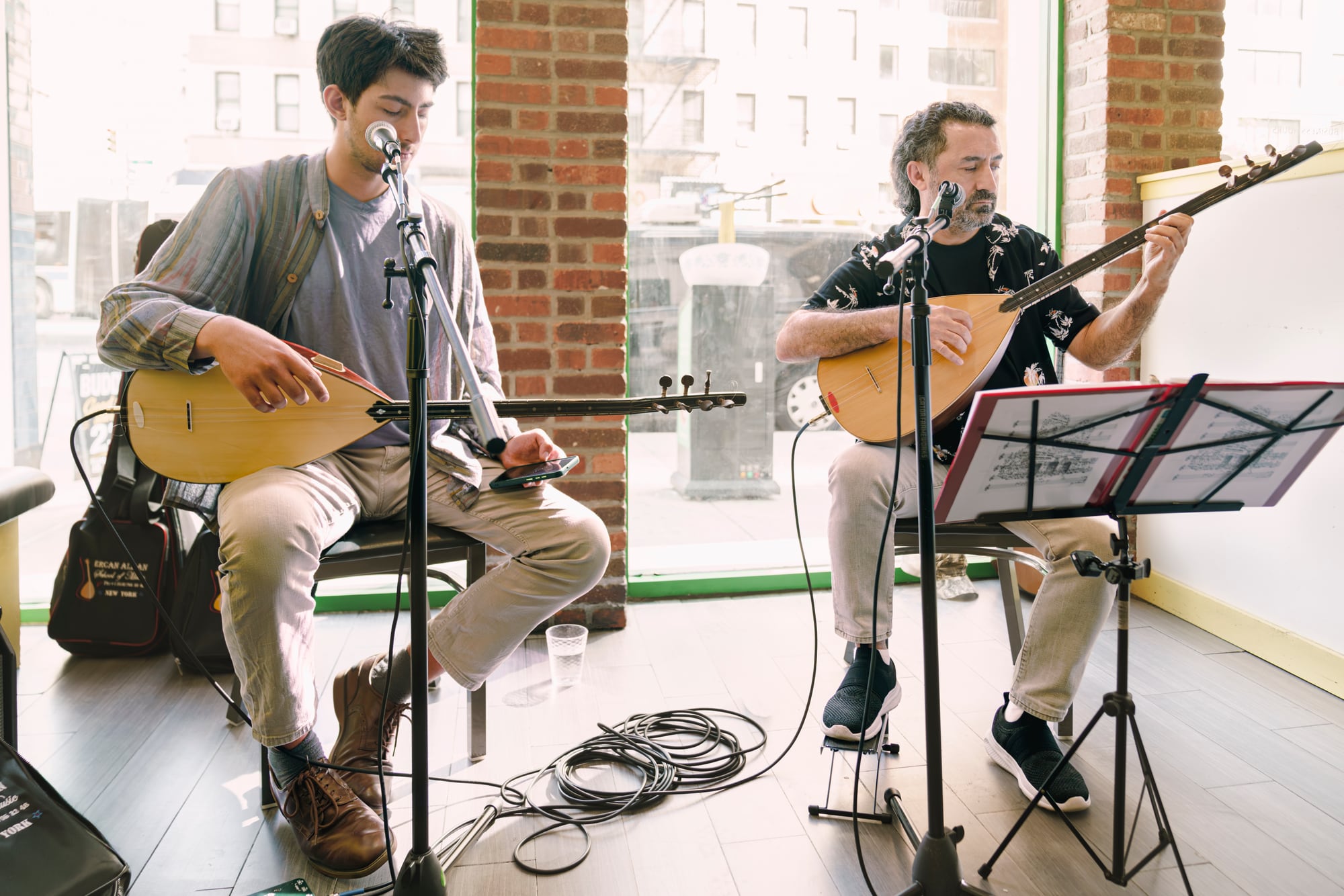
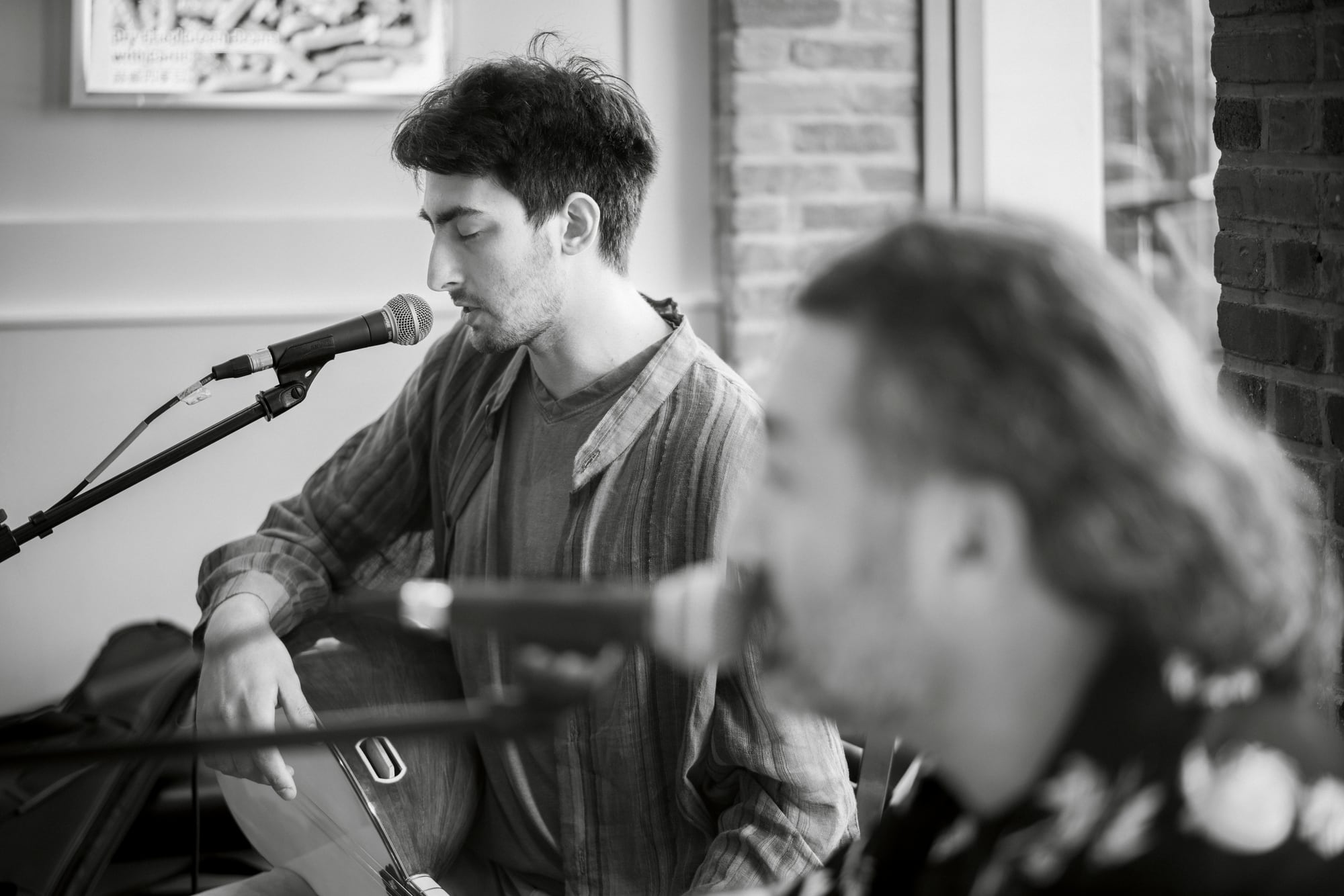
The bağlama, sacred lute of the Alevi, and the deyiş poems of wandering aşık bards, played by a hereditary Alevi dede from Erzurum.
Notes from the artists
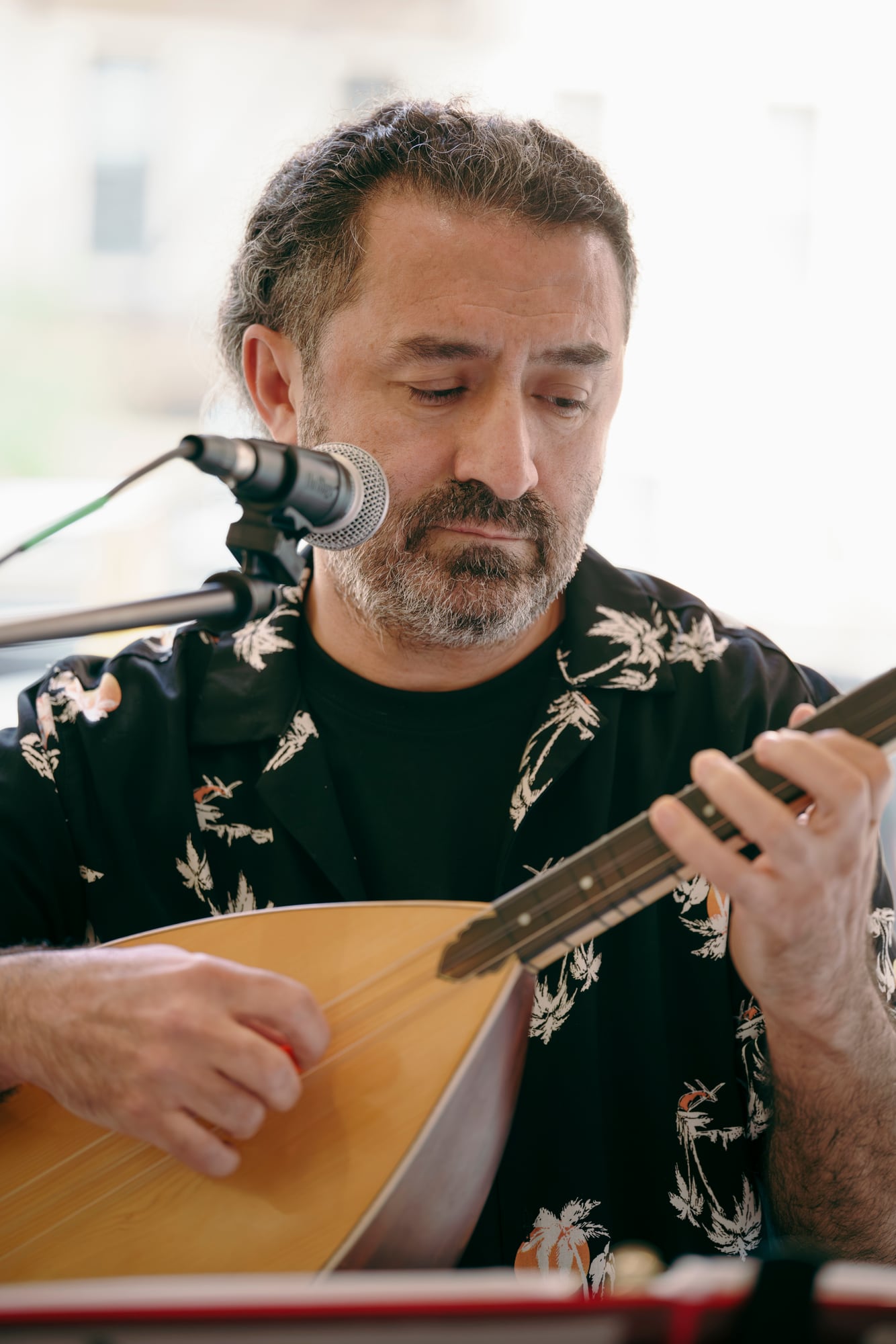
This concert features the bağlama, a long-necked, seven-stringed lute sacred in the Alevi religion of Anatolia. Traditionally played by wandering aşık bards, the bağlama is still played in Alevi ritual to accompany the mystical deyiş poems they composed centuries ago. The songs of aşıks like Pir Sultan Abdal have a simple eloquence which has kept them in the mouths of Alevis over a long history of persecution. This combination of saz and söz (music and speech) can bring the devoted to ecstasy, and even without understanding the words, the glimmering sound of the bağlama gives the deyiş surprising power. These songs are the focus of this performance.
The bağlama is also the quintessential folk instrument of Turkey. It can be heard today not only in Alevi ritual, but everywhere from Turkish pop to psychedelic Anatolian rock to the electrified dance music of Kurdish weddings. Both artists play the short-necked bağlama.
Artists
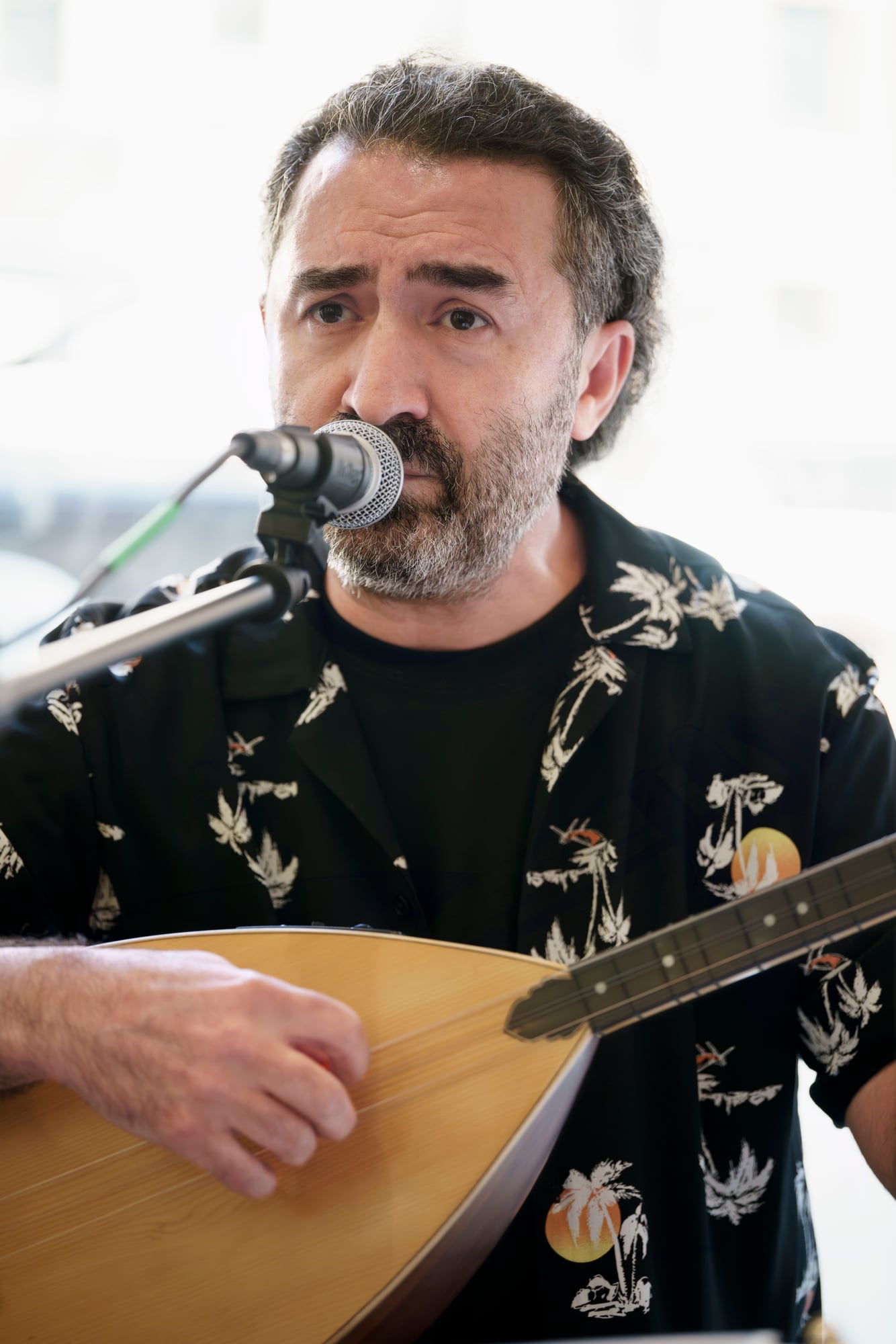
Ercan Alkan has been playing and teaching the bağlama for decades. He was born in Erzurum, in eastern Turkey, to a family in the Kureyşan lineage of dedes, or hereditary Alevi priests. Since the bağlama is sacred in Alevism and is integral to its services, Ercan grew up playing the instrument long before he received formal instruction. Like most dedes, he didn’t make a living on his music, which he played for its own sake. He spent his days as a merchant, for many years selling belts. Since moving to the US in 2025, he has been teaching bağlama in Teaneck, New Jersey and Brooklyn.
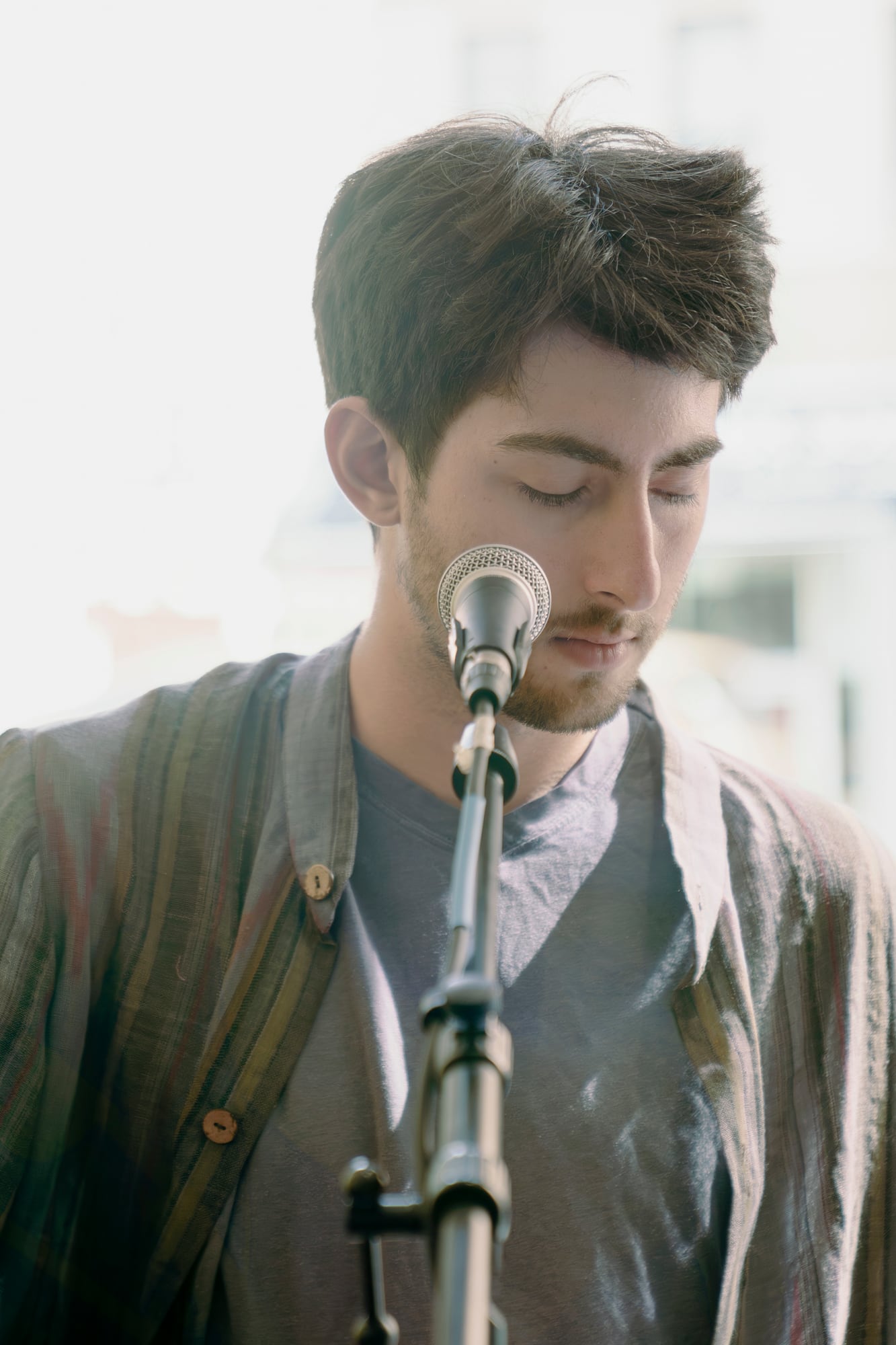
Avi Ackermann is an incoming PhD student in Religion at Columbia University interested in the history of Alevism. He has studied bağlama with Ercan since his arrival to New York.
Cultural context
While the bağlama is often associated with the Cem ritual today, its foundational roots trace back to the kopuz, a bow-stringed, skin-covered instrument central to the nomadic cultures of Central Asia. During the migration of Turkic tribes into Anatolia in the 11th–13th centuries, the instrument underwent significant structural shifts. Over the subsequent Ottoman period, it transitioned from a portable, bow-played instrument into the carved, hollow-wood, plucked lute prevalent today. This evolution was driven by the need to accommodate the maqam system, a complex melodic and microtonal structure dominant in the Middle Eastern musical landscape, which the original kopuz could not fully replicate.
Sociologically, the bağlama served as an archive of oral history. As the Anatolian landscape faced centuries of political and social upheaval, the instrument functioned as a primary conduit for non-literate communities to maintain identity. Its current global reach, sustained by diaspora communities from Western Europe to North America, mirrors its original nomadic flexibility, allowing it to adapt from the sacred spaces of rural Anatolia to the diverse acoustic and electric environments of modern global music.
Photographs
Credits
- Curator
- Mu Qian @mu.qian.1
- Producer
- Shi Qianyi eveshi@seeandsea.org
- Poster design
- Haolun Liu @lhl_bicycle
- Sound engineer
- Kaiwei Yip @yippeekaiwei
- Photography
- Tao Ho @toseiho
With thanks to
- Barbash Family Fund
- New York Chinese Opera Society Inc
- Neurocrine Biosciences, Inc.
Presented by See See Records, the record label of See & Sea Culture Foundation, a 501(c)(3) non-profit organization.