- Date
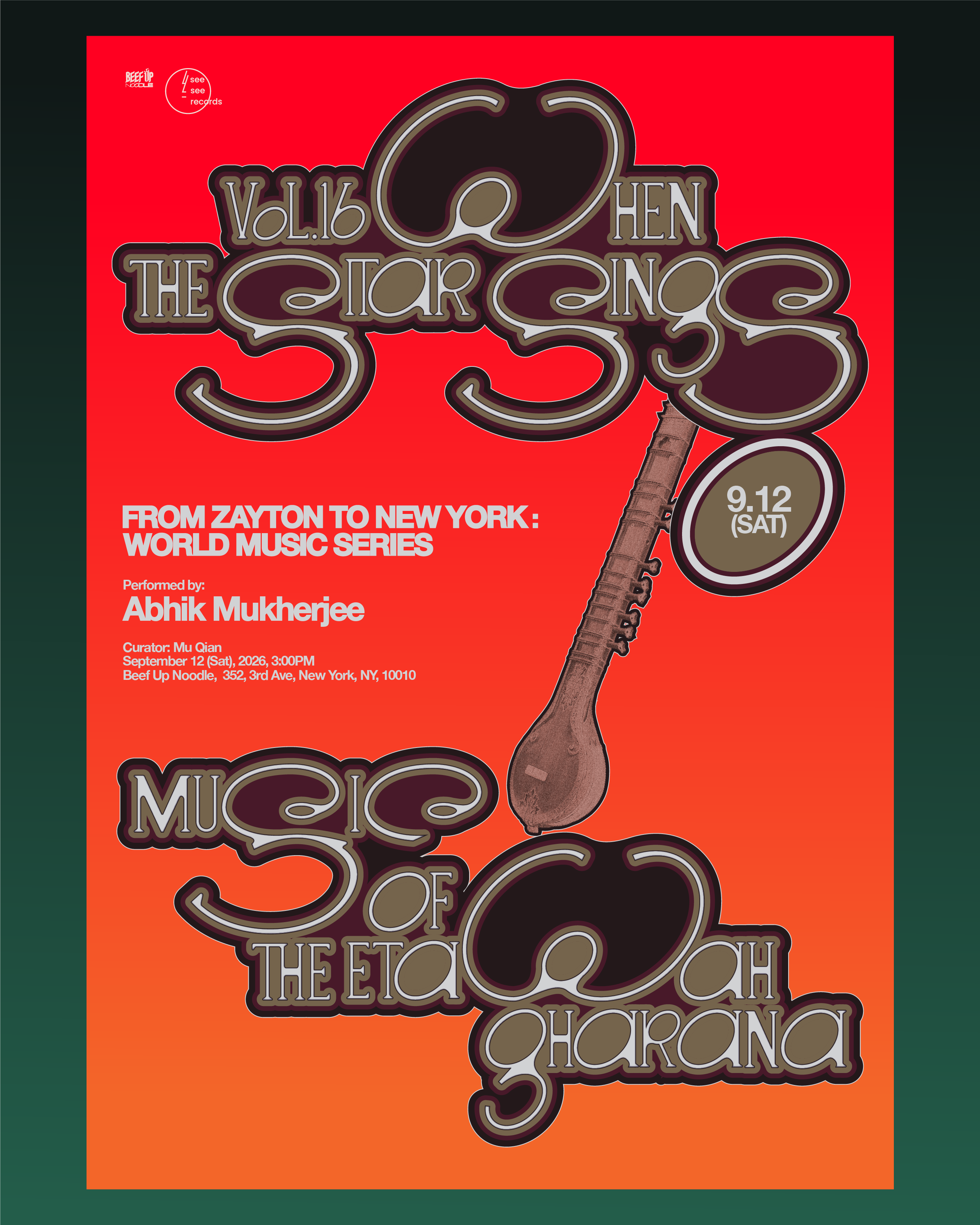
- Saturday, September 12, 2026
- Time
- 3:00 PM
- Venue
- Beef Up Noodle
352 3rd Ave, New York, NY 10010 - With
- Abhik Mukherjee, Mir Naqibul Islam
- Presented by
- See See Records
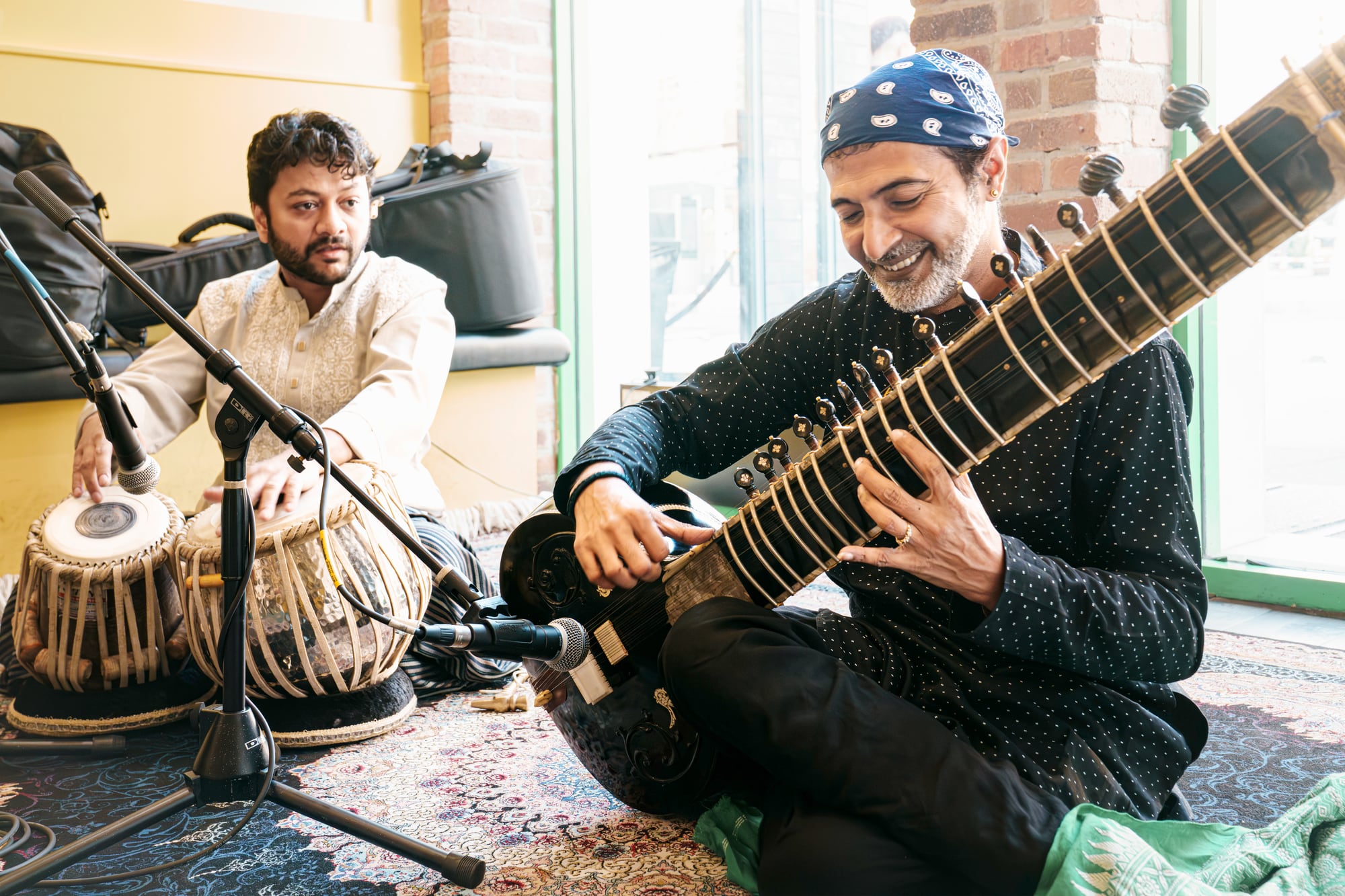
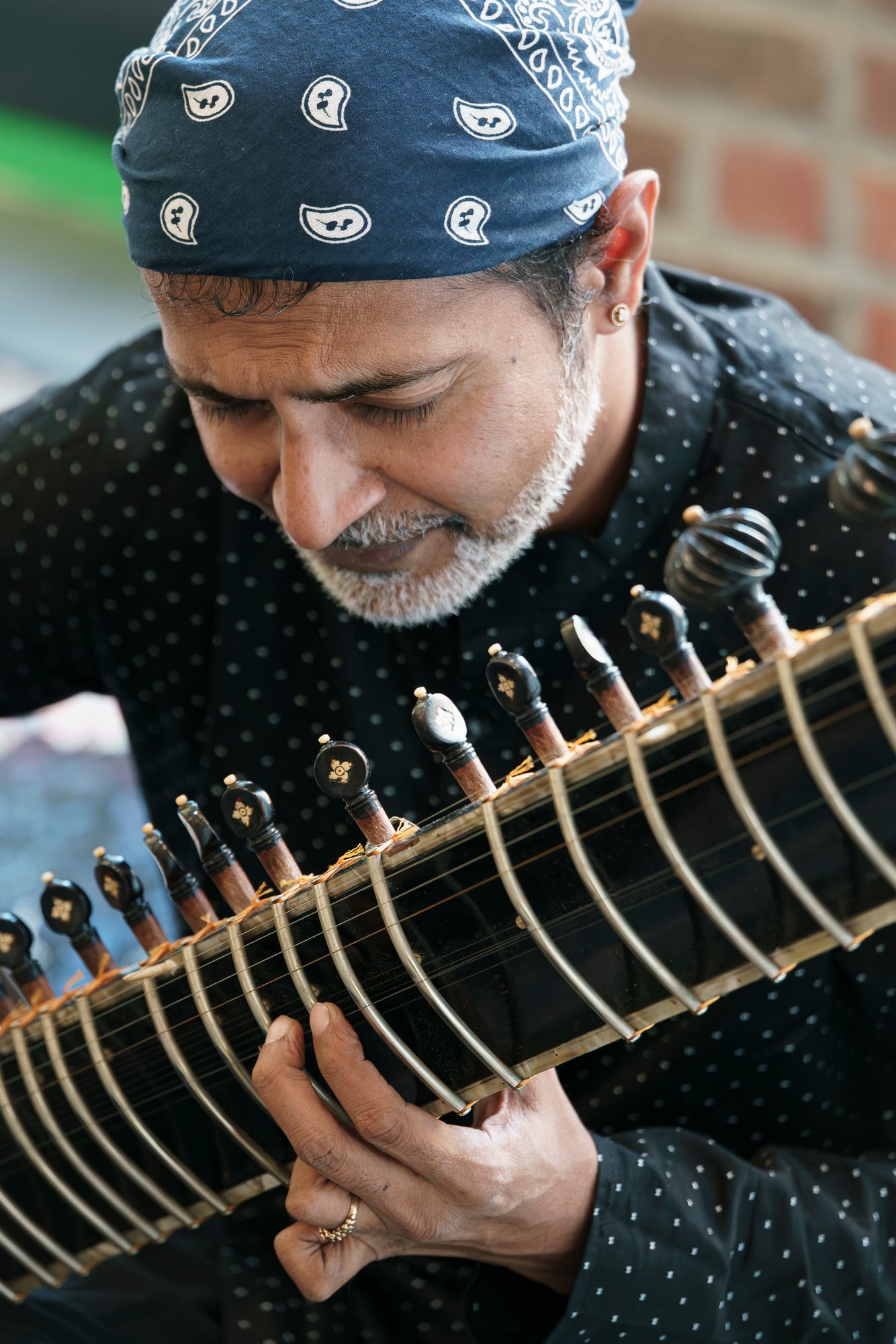
Sitarist Abhik Mukherjee, with Mir Naqibul Islam on tabla, performs the music of the Etawah gharana, one of the great lineages of Hindustani instrumental music.
Notes
This afternoon’s program is Hindustani, North Indian, classical music, built on the raga: a framework of notes and moods that the musicians explore and improvise within, so that no two performances come out quite the same. A raga usually unfolds in stages. It opens with the alap, a slow, unmetered introduction with no drum, in which the sitar feels its way through the raga’s notes over a steady drone; a pulse begins to gather in the section called jor; and once the tabla enters, the music moves into composed material, the gat, and a fast, glittering close called jhala.
Abhik Mukherjee plays in the Etawah gharana, also known as the Imdadkhani gharana, a lineage named for a town near Agra and carried forward by the great Ustad Vilayat Khan. Vilayat Khan is remembered above all for the gayaki ang, a way of playing that follows the bends and breaths of the human singing voice so closely that the sitar itself seems to sing. That singing quality is what this afternoon’s music invites you to listen for, as sitar and tabla answer each other: melody and rhythm, the composed and the improvised, arriving somewhere neither could reach alone.
Much of this music passes down by lineage, from teacher to student within a gharana (a ‘household’ or school), and is remade in the moment each time it is played.
Instruments
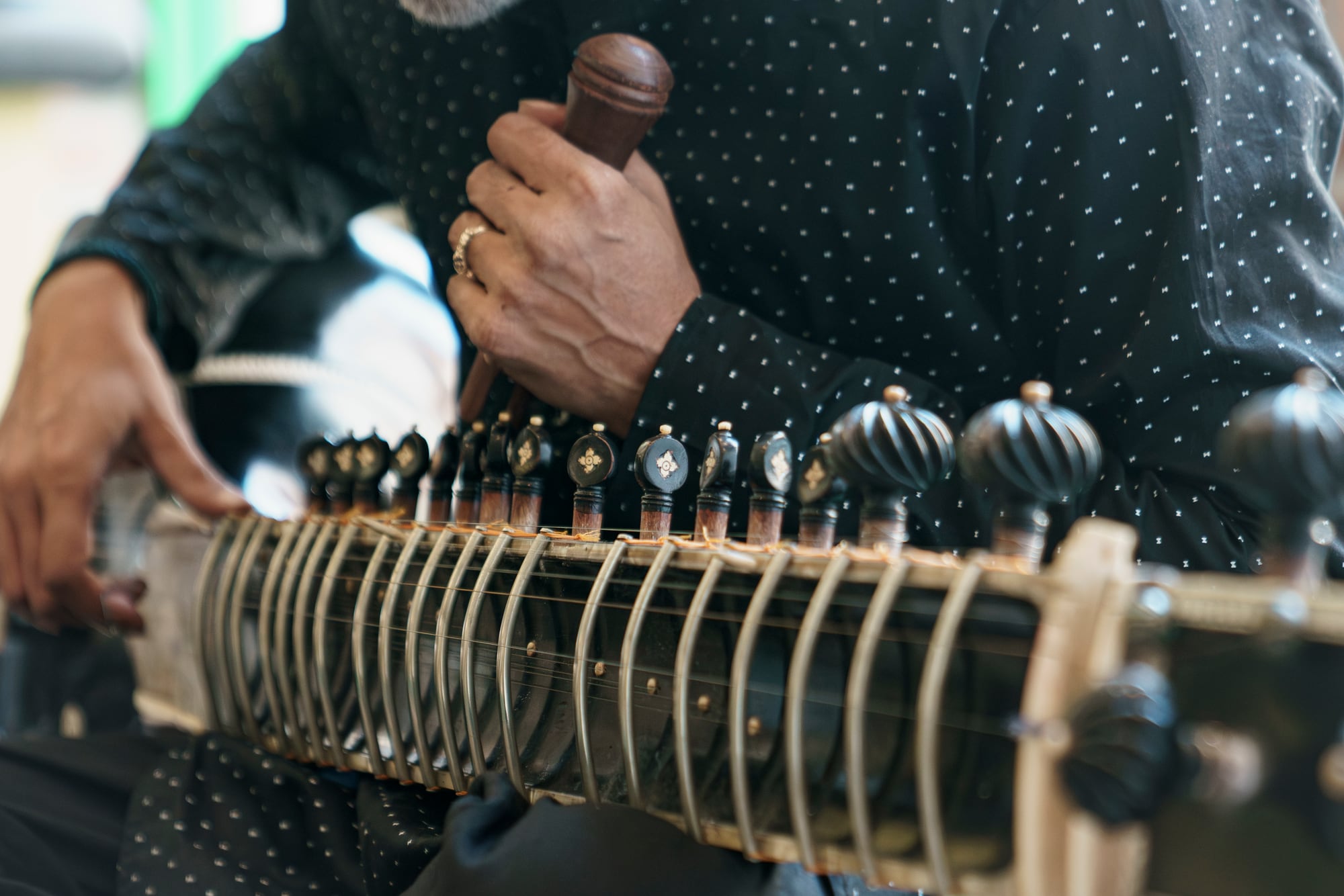
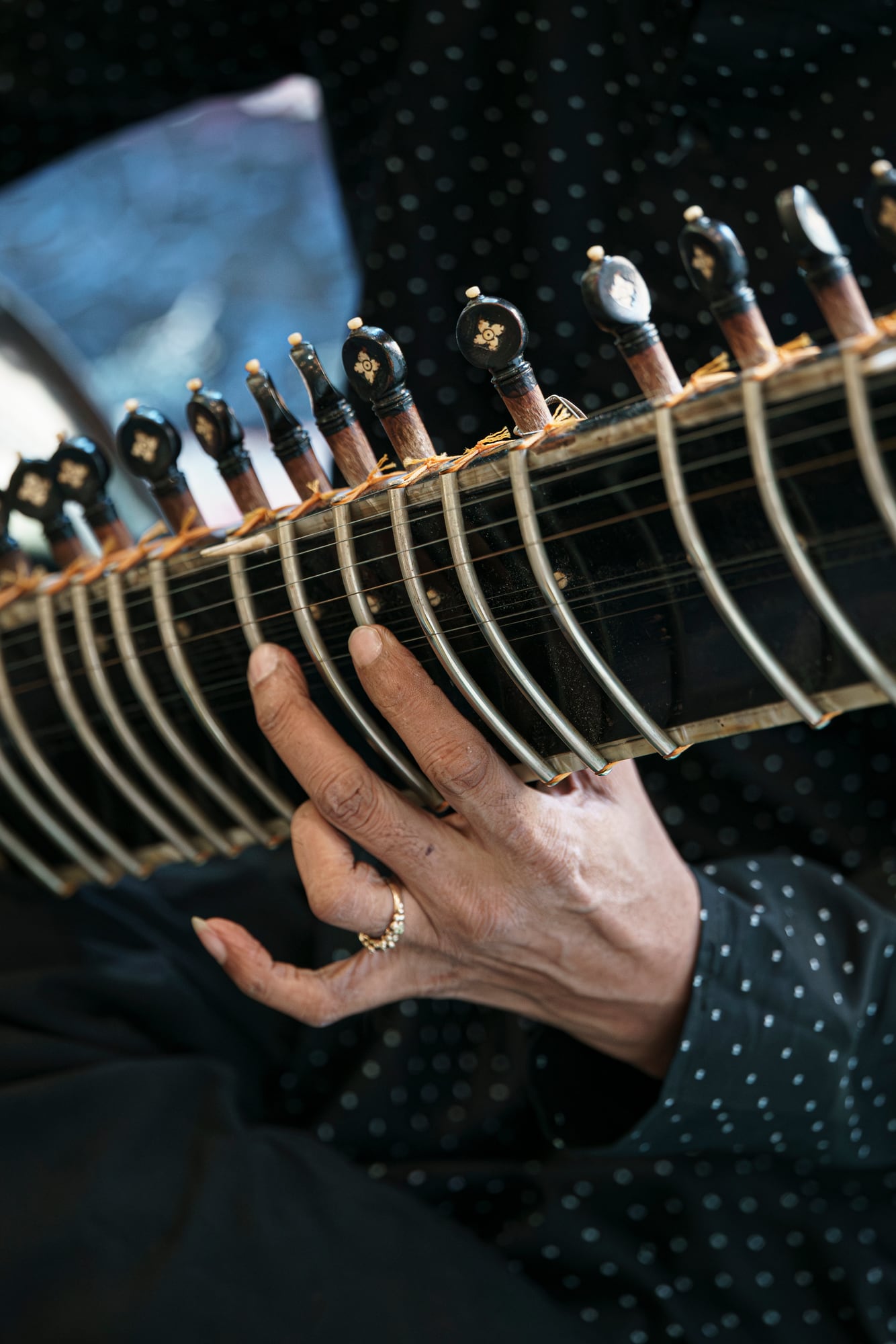
Sitar. Beneath its playing strings runs a hidden bank of sympathetic strings that are never plucked; they ring on their own, wrapping every note in a soft, shimmering halo. The curved metal frets slide along the neck, so the player can set them to the raga at hand and draw a single note across several pitches, the gliding gesture at the heart of the gayaki ang.
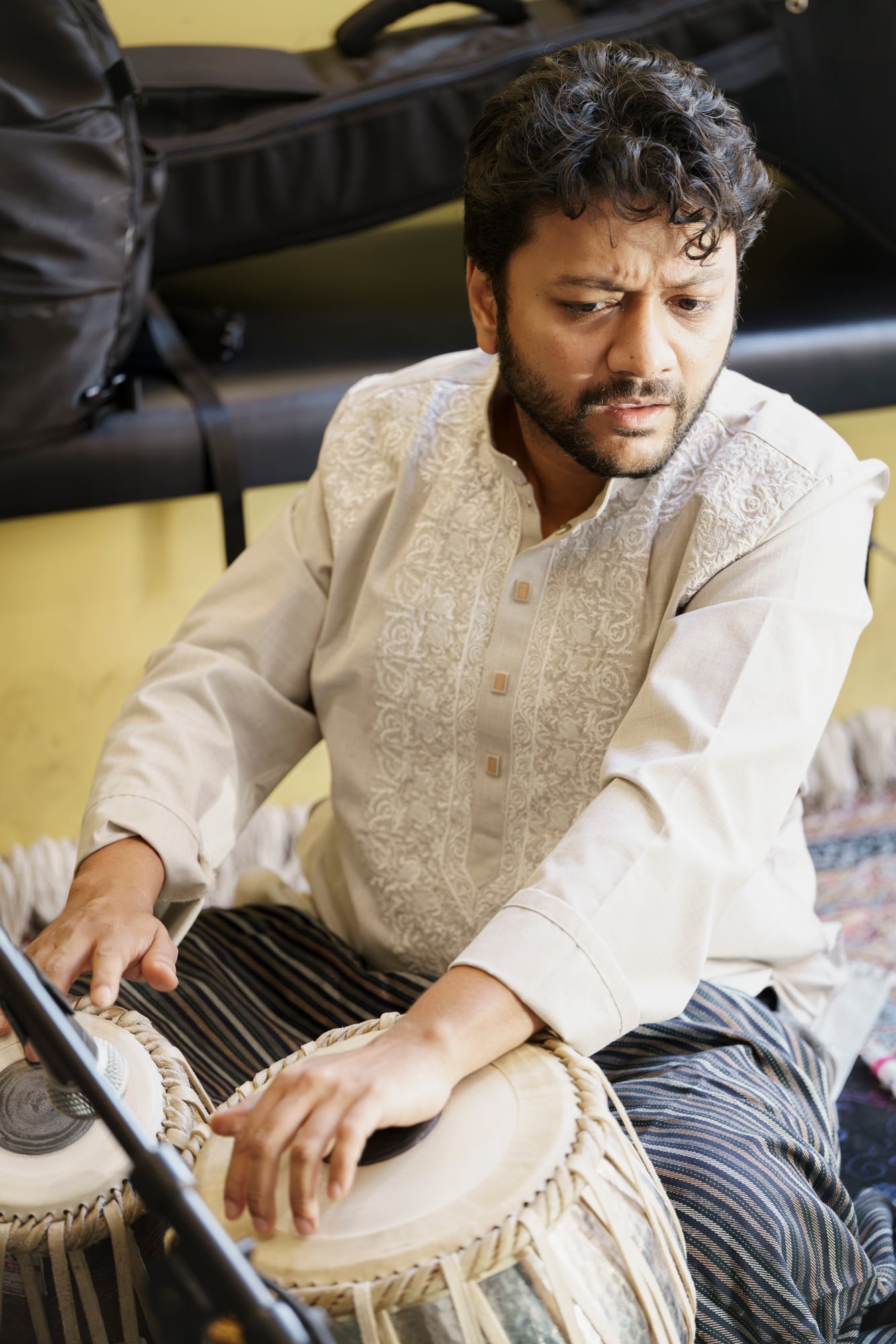
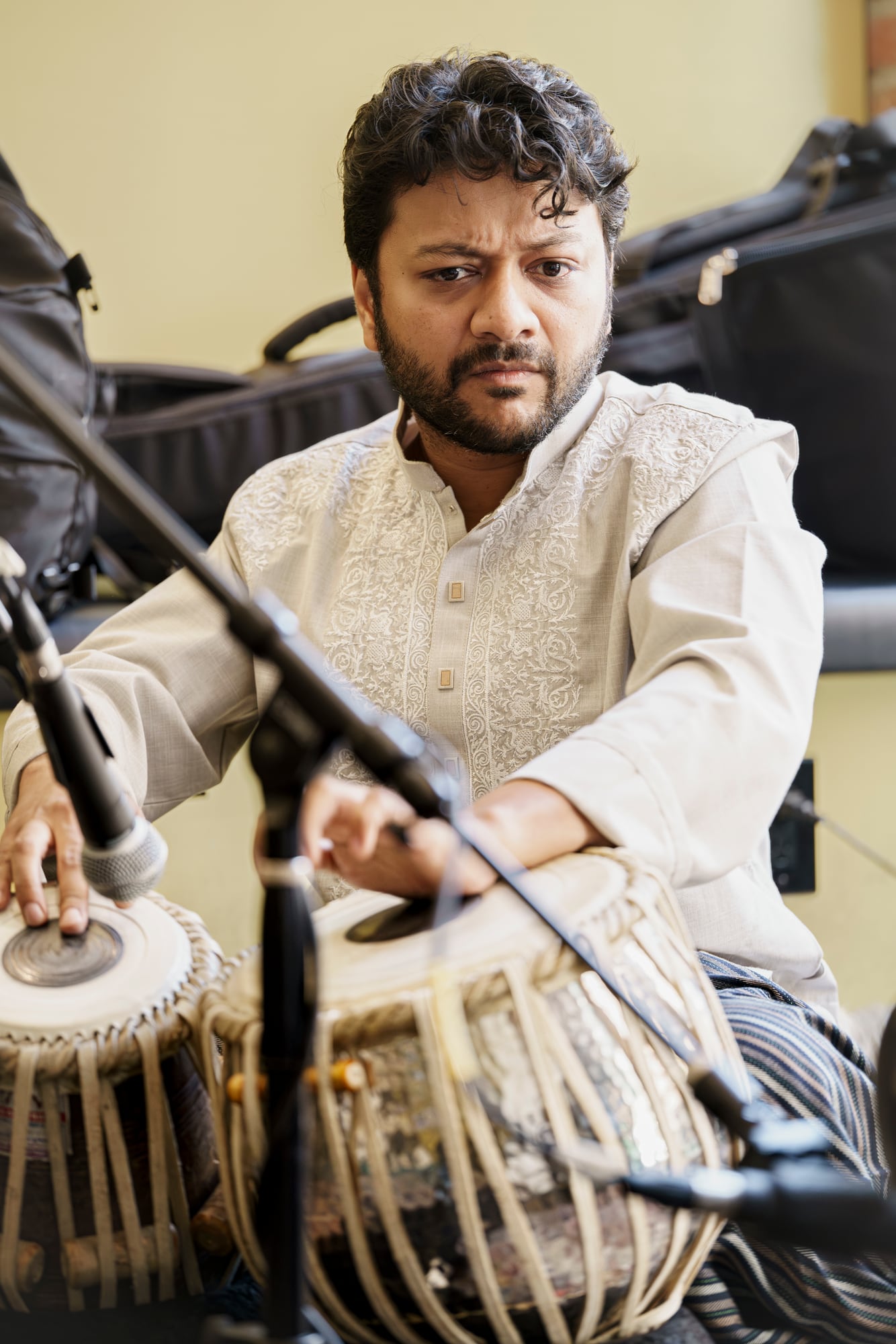
Tabla. A pair of drums with a remarkably wide voice: the right-hand drum sounds clear, tunable pitches, while the left-hand drum gives a deep bass that the player bends live with the heel of the hand. Between them they command a whole language of named strokes, from a dry tick to a booming resonance, and lay out the rhythmic cycles the music turns on.
Artists
Abhik Mukherjee (sitar) was born in Kolkata and began playing at the age of six, giving his first public concert at nine, at Kolkata’s Governor’s House. He trained for many years under Pandit Arvind Parikh and Pandit Kashinath Mukherjee, both disciples of Ustad Vilayat Khan, and holds a gold medal in musicology from Rabindra Bharati University. His playing has taken him to Carnegie Hall, the New York Philharmonic, and the Metropolitan Museum of Art, and to the inauguration of the Dr. Martin Luther King, Jr. Memorial in Washington, D.C., where he shared a bill with Stevie Wonder and Aretha Franklin. Alongside his concert work he is a devoted teacher and a founding member of Brooklyn Raga Massive, the collective advancing Indian classical music across New York. He now makes his home in New York.
Mir Naqibul Islam (tabla) was born in Dhaka, Bangladesh, and is based in the New York area. He stands in the Farrukhabad gharana of tabla and is a disciple of Pandit Ashoke Paul and the legendary Pandit Anindo Chatterjee. He gives solo recitals and accompanies vocalists, instrumentalists, and dancers, and moves with ease beyond the classical tradition into jazz, maqam, chamber, and new music. A member of Brooklyn Raga Massive since 2016, he performs across the city’s concert halls and new-music venues.
Photographs
Credits
- Curator
- Mu Qian @mu.qian.1
- Producer
- Shi Qianyi eveshi@seeandsea.org
- Poster design
- Haolun Liu @lhl_bicycle
- Sound engineer
- Kaiwei Yip @yippeekaiwei
- Photography
- Tao Ho @toseiho
With thanks to
- Barbash Family Fund
- New York Chinese Opera Society Inc
- Neurocrine Biosciences, Inc.
Presented by See See Records, the record label of See & Sea Culture Foundation, a 501(c)(3) non-profit organization.