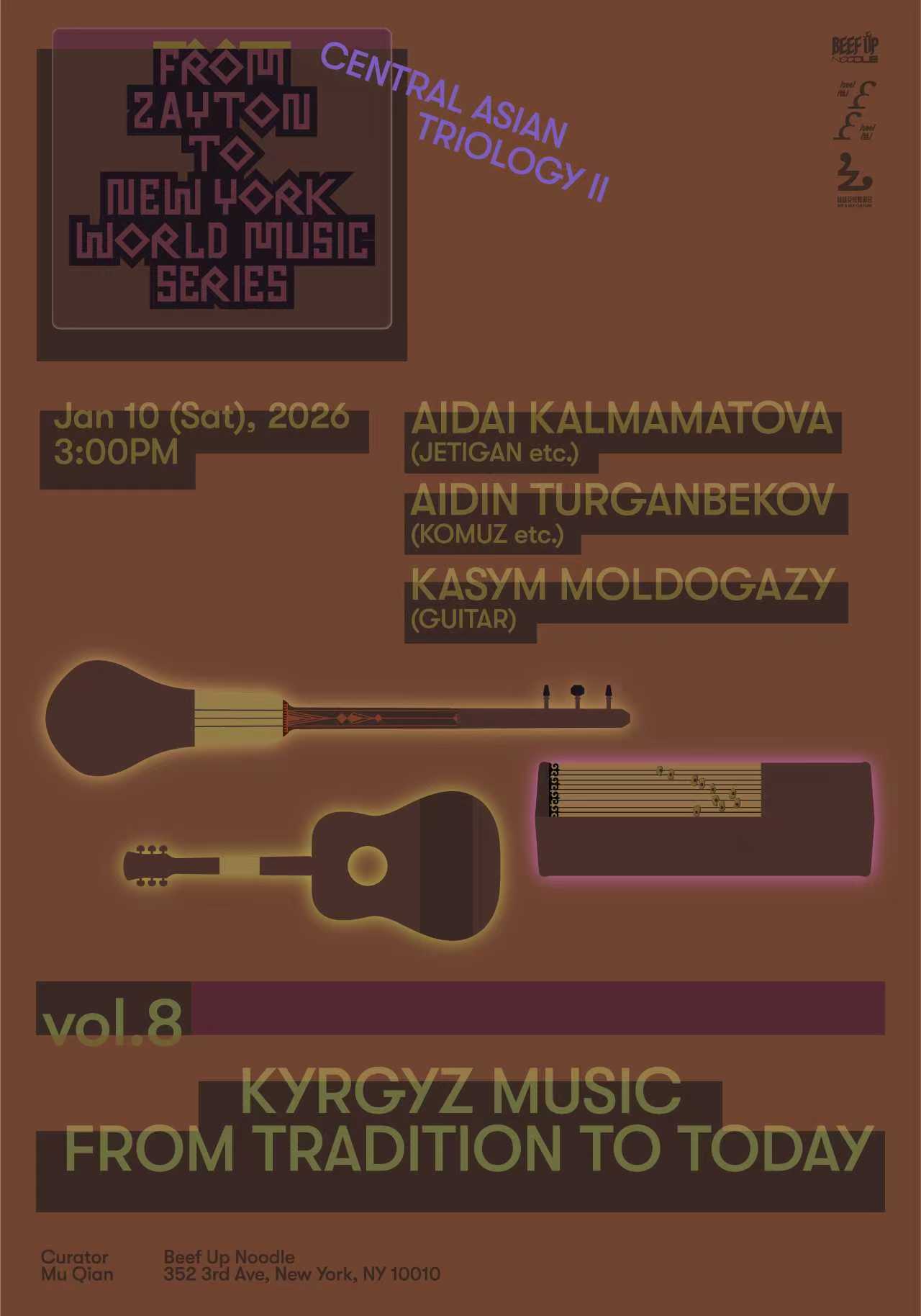
- Date
- Saturday, January 10, 2026
- Time
- 3:00 PM
- Venue
- Beef Up Noodle
352 3rd Ave, New York, NY 10010 - With
- Aidai Kalmamatova, Aidin Turganbekov, Kasym Moldogazy
- Presented by
- See See Records
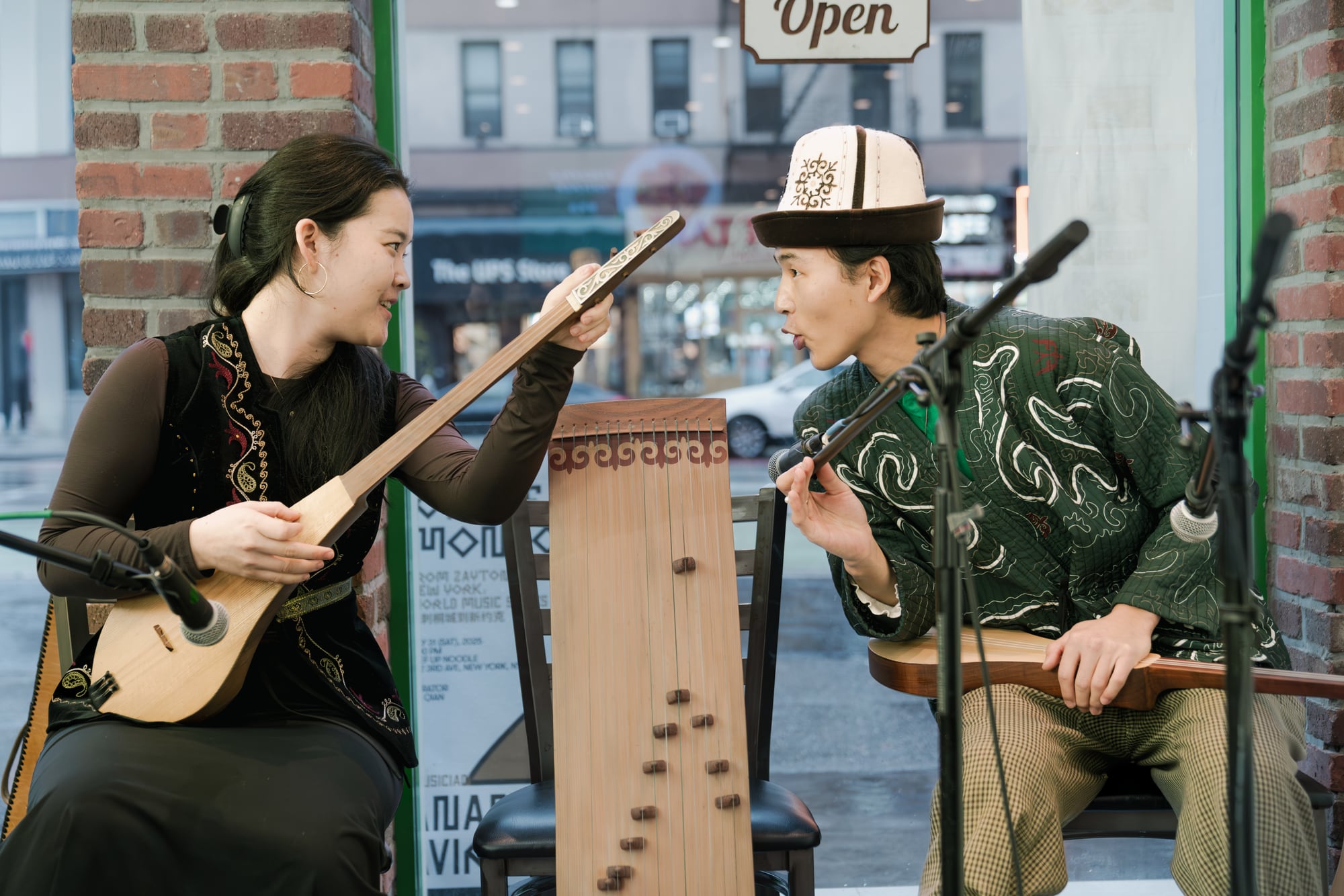
Kyrgyz music on jetigan, komuz and guitar, from the epic tradition to the present day.
About the concert
This concert presents musical traditions of Kyrgyzstan alongside contemporary practices shaped by migration and diasporic life. Rooted in nomadic histories and epic storytelling, Kyrgyz music has long accompanied herding, ritual, and communal gathering.
Instrumental and vocal traditions convey narrative meaning through timbre, gesture, and rhythm. Central to the repertoire are kuu, instrumental pieces evoking landscapes, animals, historical figures, and emotional states. In modern performance contexts, these traditions also appear in staged forms, where visual expressivity, especially in komuz performance, coexists with inherited musical values.
Performances by U.S.-based Kyrgyz musicians Aidai Kalmamatova, Aidin Turganbekov, and Kasym Moldogazy feature plucked and bowed strings, mouth harp, singing, and guitar.
Instruments
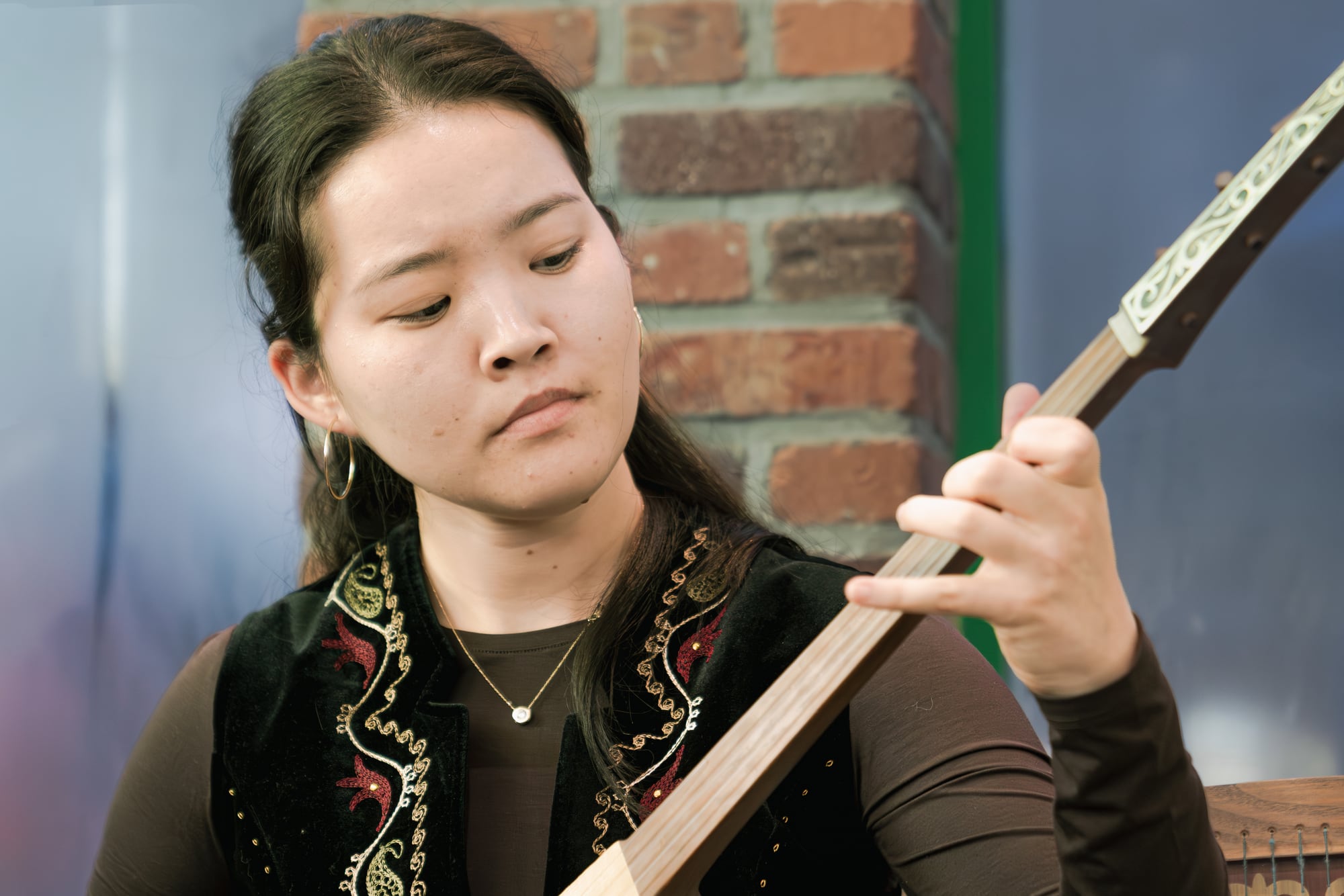
Komuz. A three-stringed, fretless lute carved from a single block of wood, the komuz is central to Kyrgyz instrumental music. Its playing style emphasizes rhythmic clarity, percussive articulation, and timbral nuance, often evoking sounds of nature and movement.
Jetigen. The jetigen is a plucked zither associated with ancient Turkic cultures. Nearly lost in the 20th century, it has been revived through reconstruction of technique and repertoire, producing a delicate and resonant sound suited to lyrical expression.
Ooz komuz. The ooz komuz (metal jaw harp) produces shifting overtones shaped by the mouth cavity. Despite its small size, it supports complex rhythmic and timbral variation and is often associated with intimate and reflective listening.
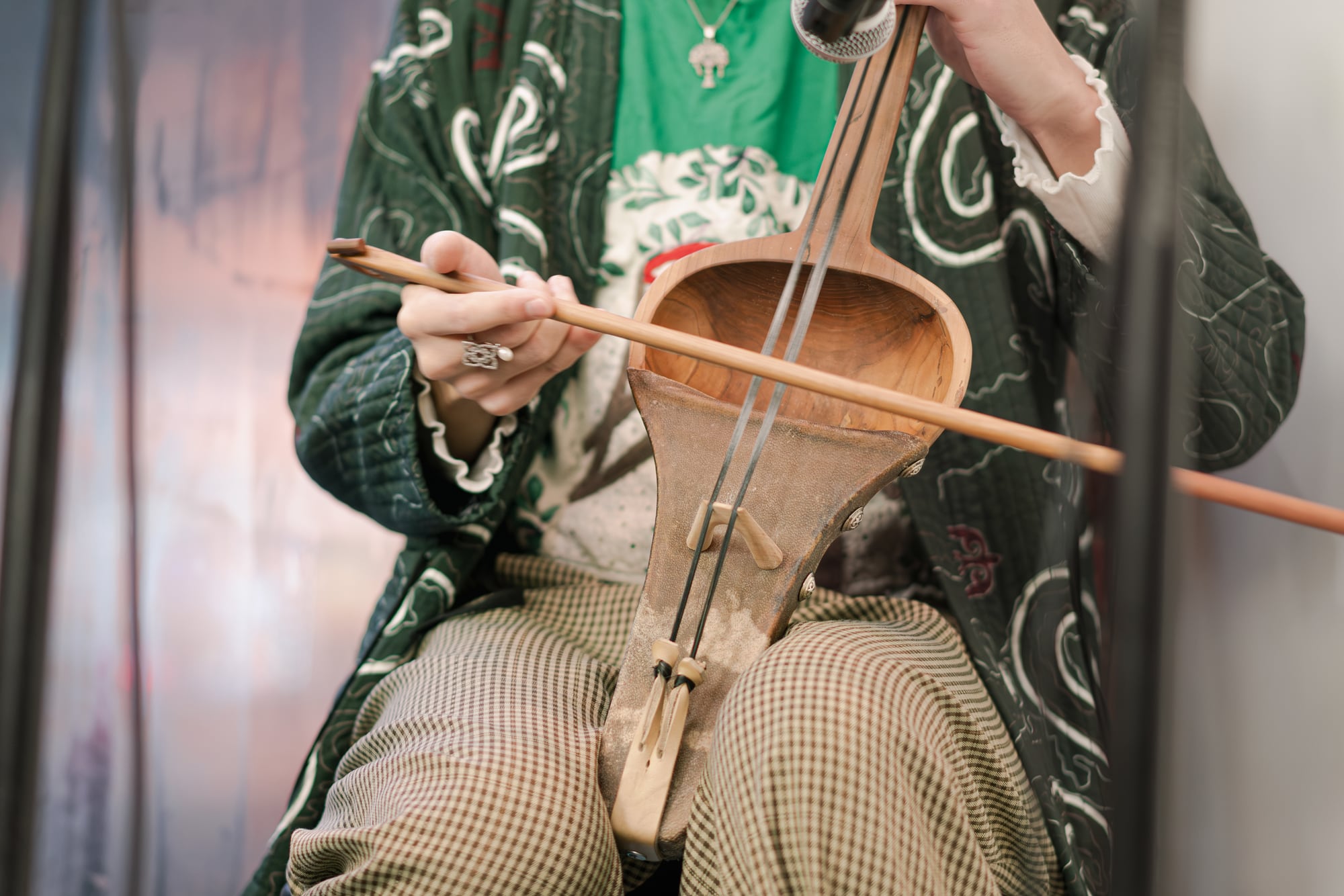
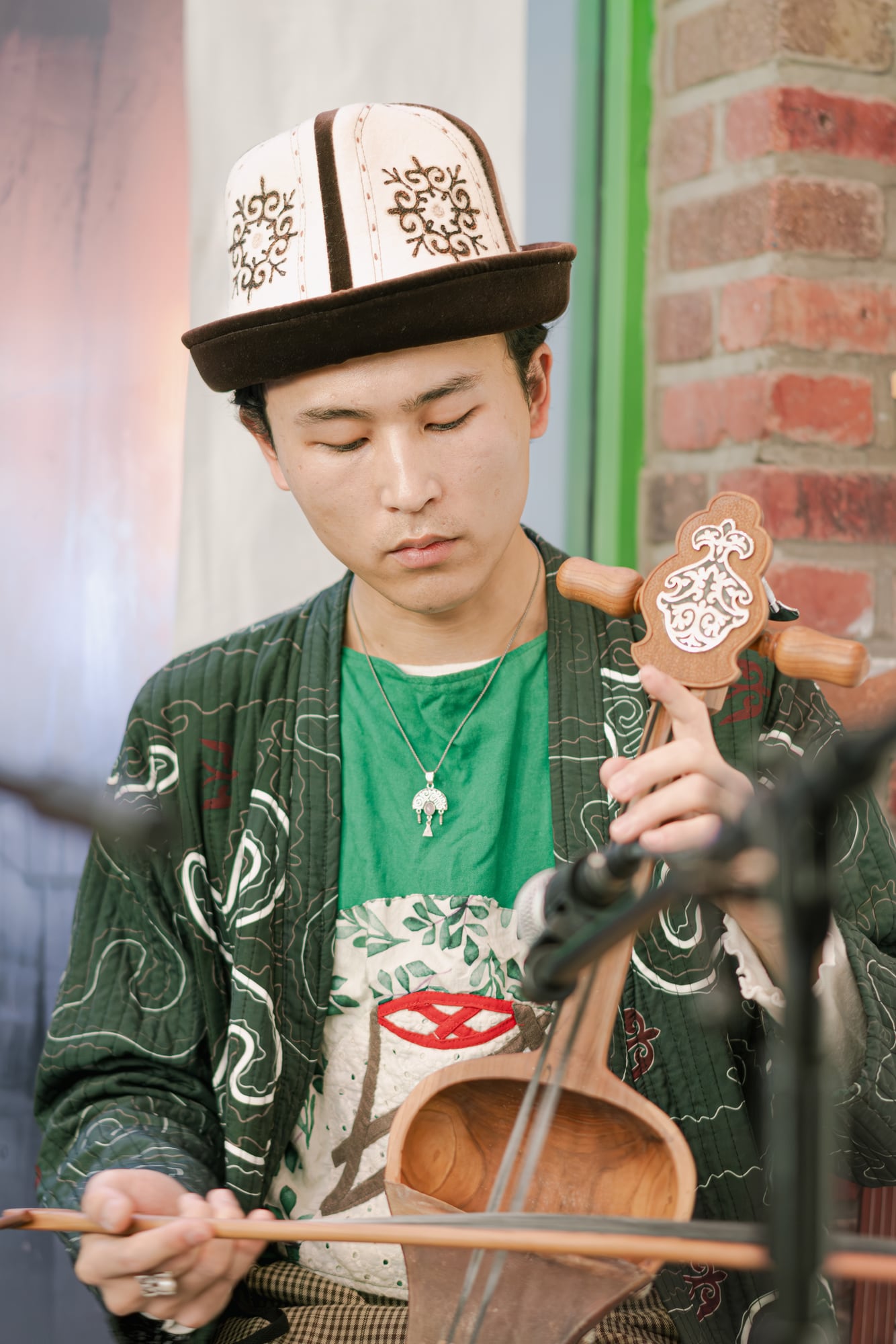
Kyl kiyak. A bowed string instrument traditionally linked to epic narration and ritual, the kyl kiyak produces a raw, voice-like timbre and appears today in both traditional and experimental contexts.
Performers
Aidai Kalmamatova is a graduate of the Kyrgyz National Conservatory, where she became the first student to specialize in the jetigen, an instrument that had nearly vanished from active use. Through mentorship with master musician Jusup Aisaev, she has contributed significantly to the revival and expansion of the jetigen’s contemporary repertoire. She is currently pursuing graduate studies in ethnomusicology at Wesleyan University, where she continues to combine performance, research, and cultural preservation.
Aidin Turganbekov started his musical training in childhood through a village youth music school. He later studied komuz and kyl kiyak at Murataly Kurenkeyev Kyrgyz National Music College before pursuing sociology at the American University of Central Asia. Now based in New York, he remains actively engaged in music-making and community work, hosting Central Asian cultural gatherings that create spaces for diasporic connection and cultural continuity.
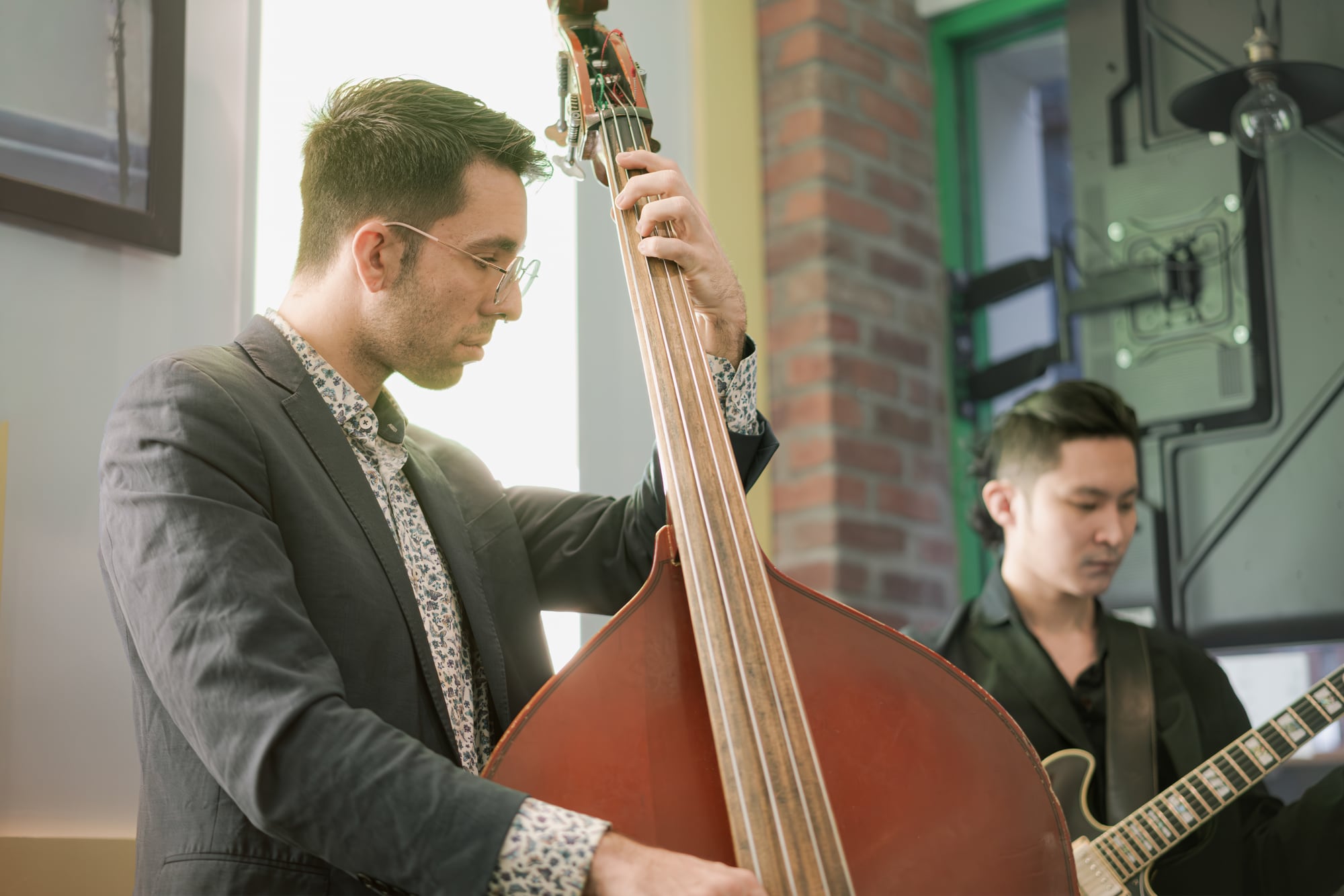
Kasym Moldogazy is a New York-based Kyrgyz guitarist whose work reflects migration, urban experience, and cross-cultural exchange, and connects Kyrgyz melodic thinking with contemporary idioms. He earned a master’s degree in jazz and performs across a wide range of styles, including funk, rock, and soul. He has also played extensively in Black churches throughout the South and New York City, further deepening his musical perspective and versatility.
Program
The program includes solo performances by each musician and ensemble pieces in duo and trio formations. The repertoire draws from traditional kuu, vocal works, revived instrumental compositions, and contemporary pieces shaped by diasporic experience. Through shifting textures and instrumental combinations, the concert emphasizes continuity and transformation within Kyrgyz music, presenting tradition not as a fixed past, but as an ongoing creative process.
Photographs
Credits
- Curator
- Mu Qian @mu.qian.1
- Producer
- Shi Qianyi eveshi@seeandsea.org
- Poster design
- Haolun Liu @lhl_bicycle
- Sound engineer
- Kaiwei Yip @yippeekaiwei
- Photography
- Tao Ho @toseiho
With thanks to
- Barbash Family Fund
- New York Chinese Opera Society Inc
- Neurocrine Biosciences, Inc.
Presented by See See Records, the record label of See & Sea Culture Foundation, a 501(c)(3) non-profit organization.