From Zayton to New York · Vol. 7
Songs of the Bakhshi: Turkmen Bardic Heritage
Central Asian Trilogy I
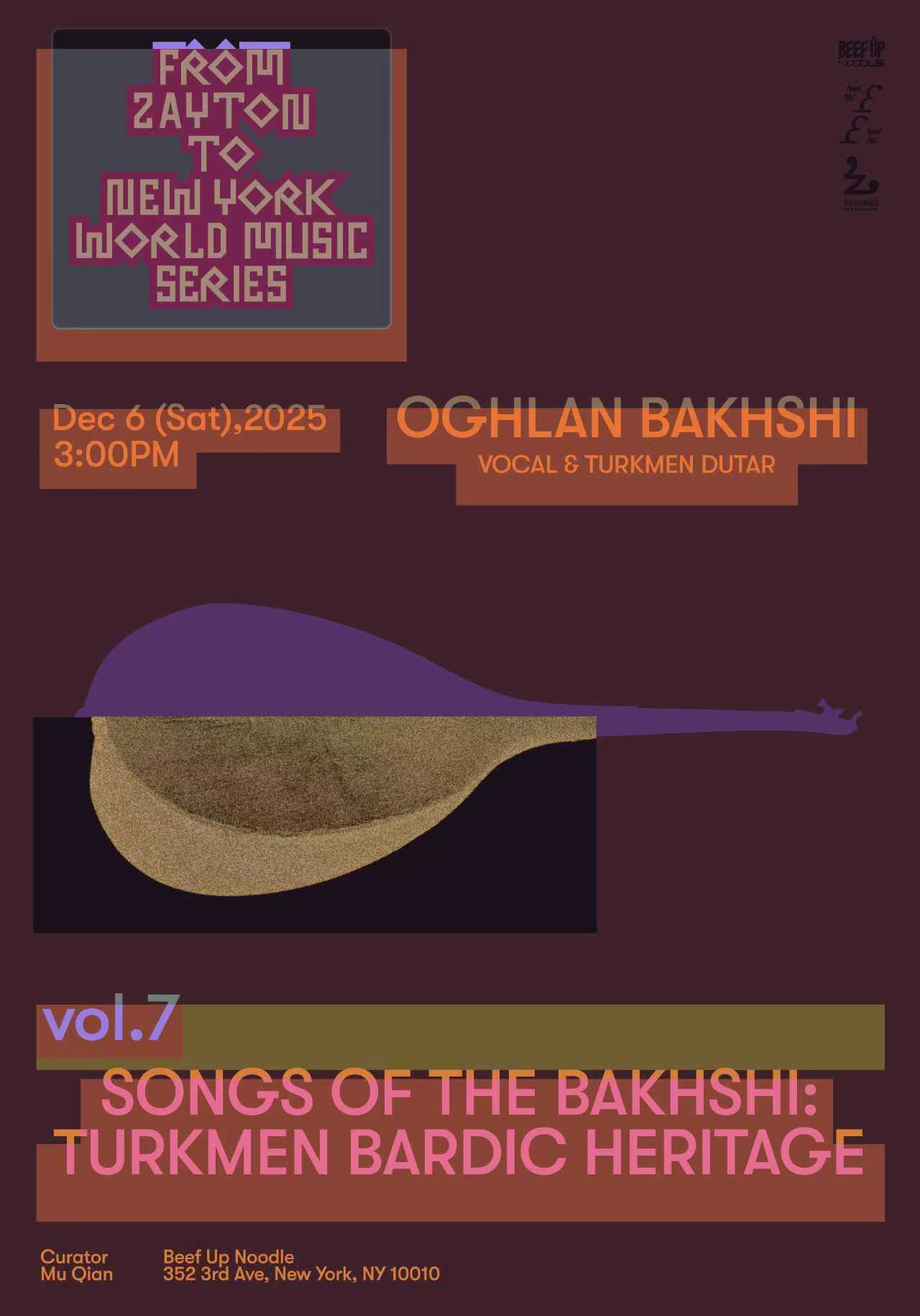
- Date
- Saturday, December 6, 2025
- Time
- 3:00 PM
- Venue
- Beef Up Noodle
352 3rd Ave, New York, NY 10010 - With
- Oghlan Bakhshi
- Presented by
- See See Records
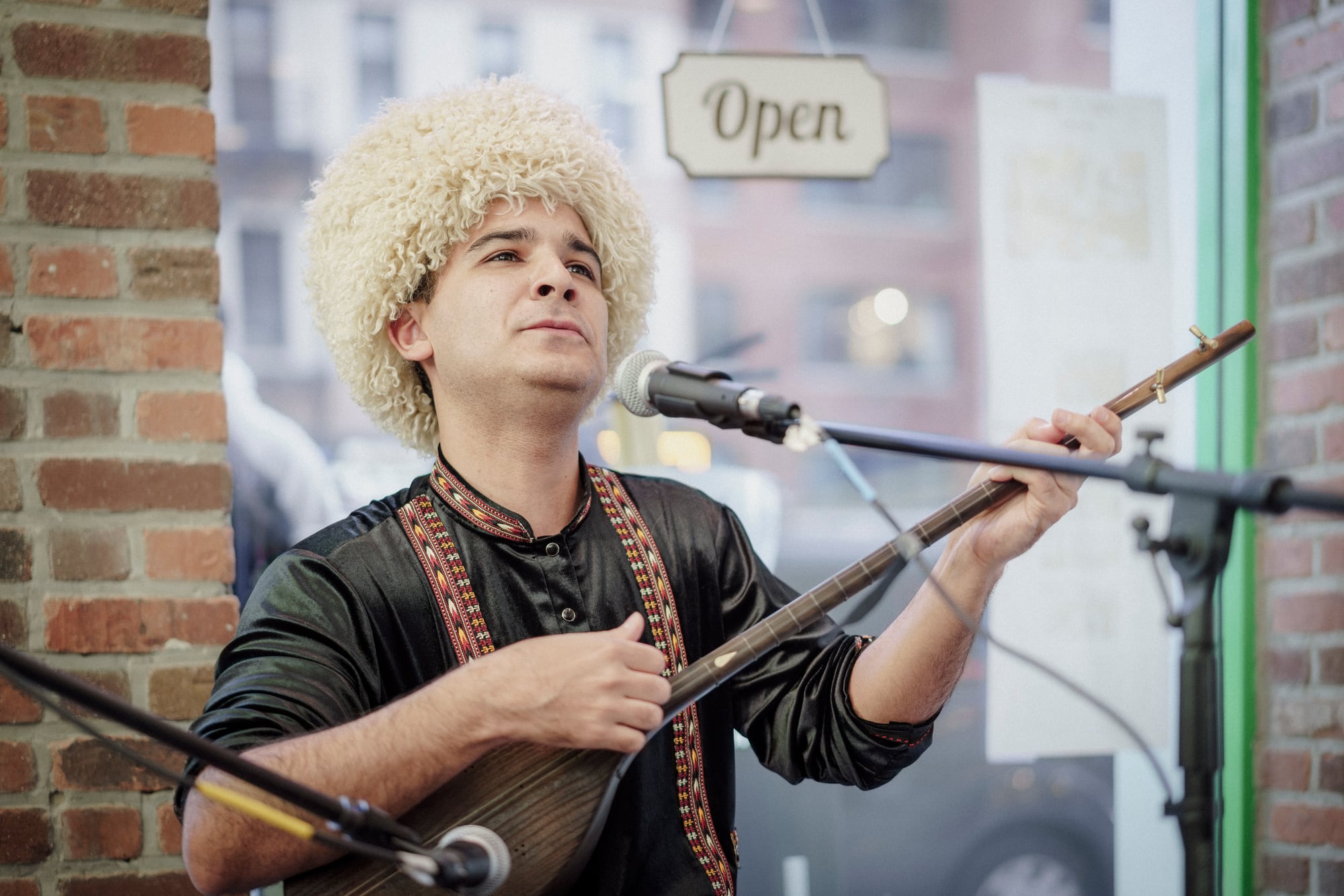
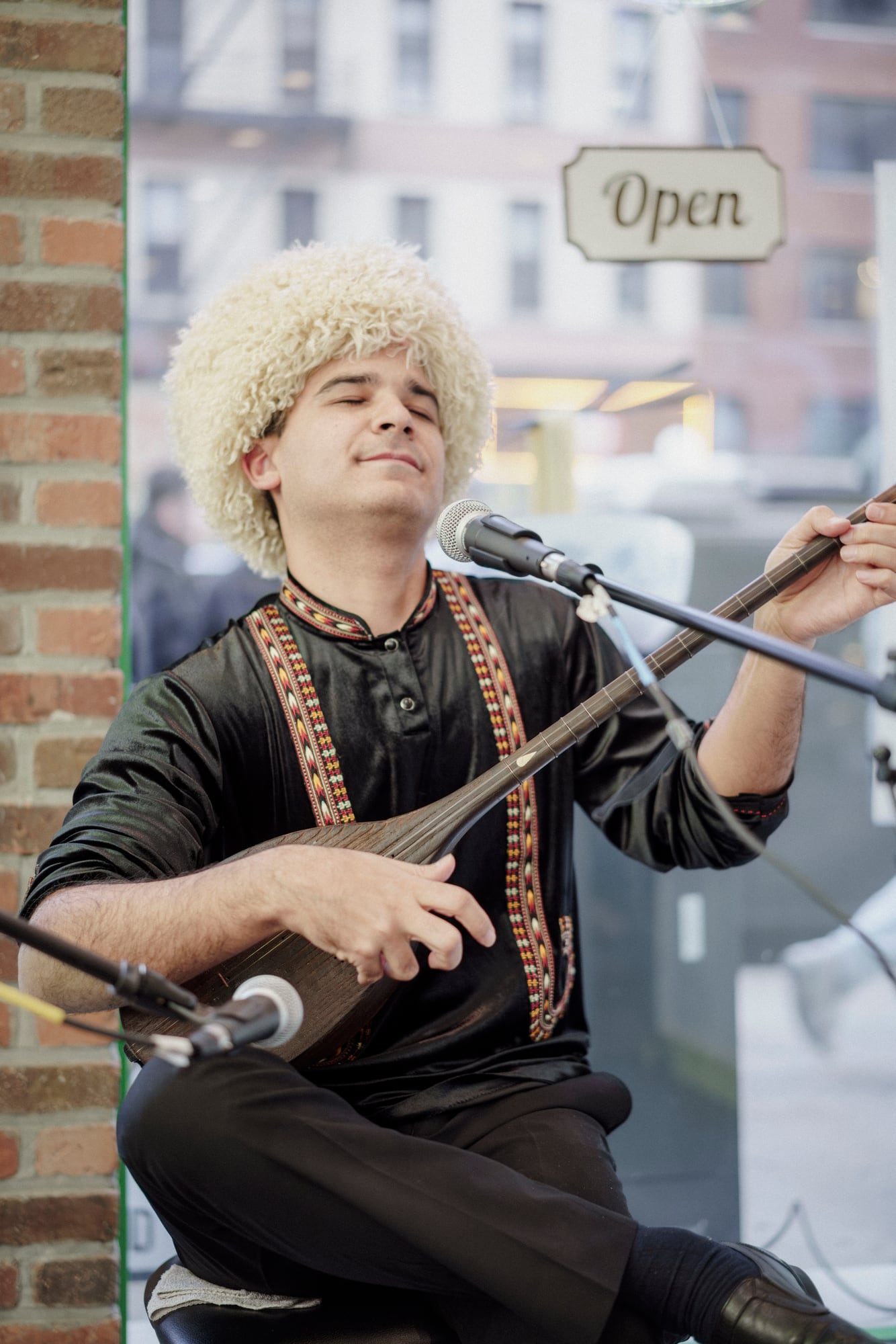
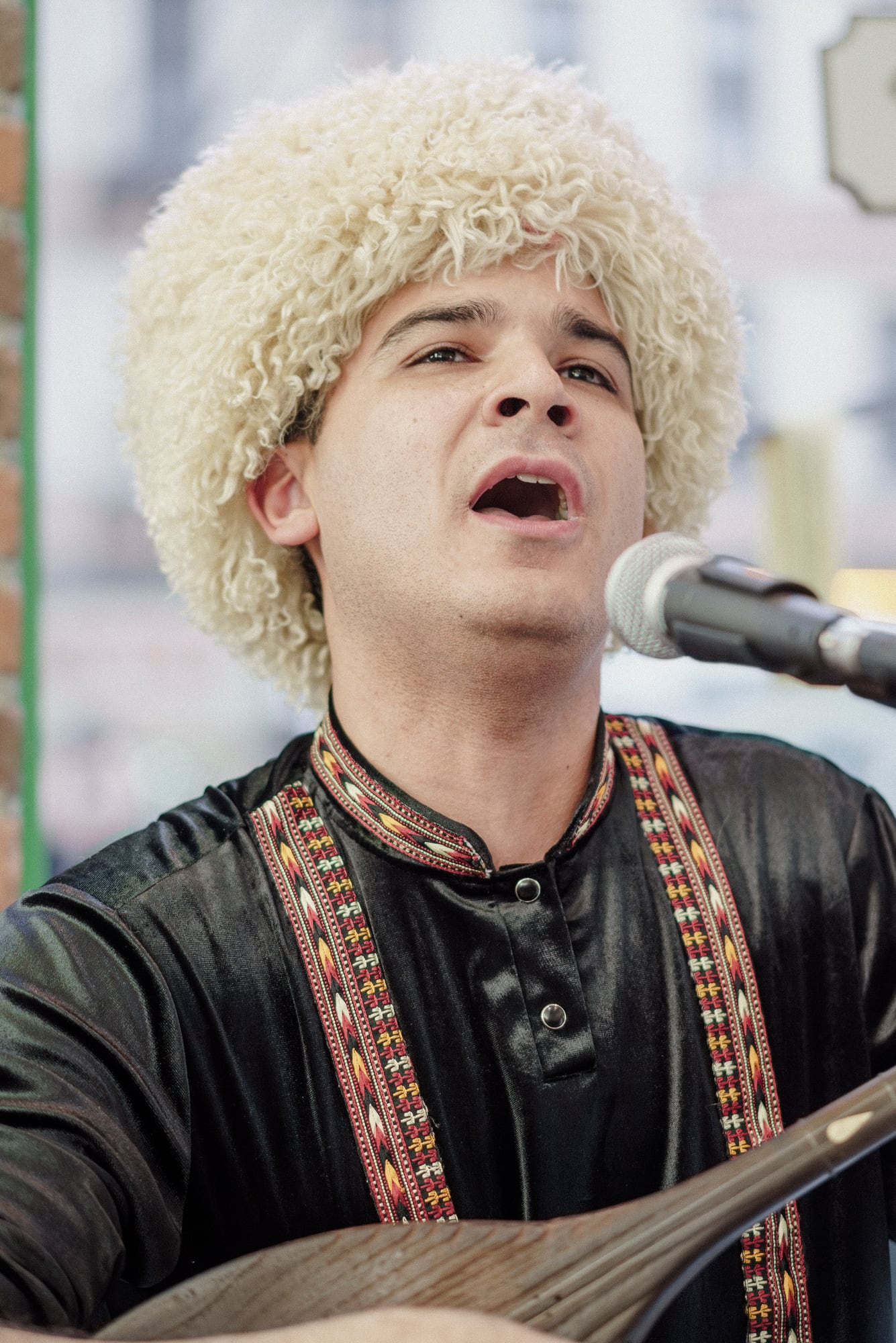
Turkmen bardic music on the dutar with Oghlan Bakhshi, recognized as a “child bard” by a council of elders at the age of ten.
Turkmen people and their musical world
The Turkmens are a Turkic people whose cultural homeland spans Turkmenistan, northeastern Iran, northern Afghanistan, and parts of Uzbekistan. Historically organized in tribal confederations and shaped by a nomadic and semi-nomadic way of life, Turkmen communities have long inhabited the steppes, deserts, and oases that stretch across Central Asia. Their culture is marked by strong poetic traditions, intricate carpet weaving, equestrian lore, and a rich musical heritage that reflects centuries of life along the Silk Road.
Turkmen music is distinguished by its expressive vocal styles, epic storytelling, and the central role of the dutar, the two-stringed long-necked lute whose resonant timbre has become the sonic emblem of Turkmen identity. Musical repertories range from heroic epics (dastan) and love songs to dance melodies and ceremonial pieces performed at weddings and communal gatherings. While musical styles vary from region to region, from Turkmenistan’s Ahal and Mary provinces to Iran’s Golestan region and Afghanistan’s Jowzjan and Faryab provinces, the tradition as a whole values emotional depth, narrative clarity, and the close interplay between poetry and melody. In this musical landscape, few figures are as important or revered as the bakhshi, the bearer of bardic knowledge.
The bakhshi tradition
In Turkmen musical culture, the bakhshi (also spelled bagşy) occupies a place of exceptional artistic and cultural significance. More than a musician, the bakhshi is a bard, storyteller, poet, and dutar virtuoso whose performances weave together history, spirituality, and communal memory. For centuries, bakhshis have served as custodians of Turkmen oral literature, carrying epic tales, lyric poetry, and moral teachings from one generation to the next.
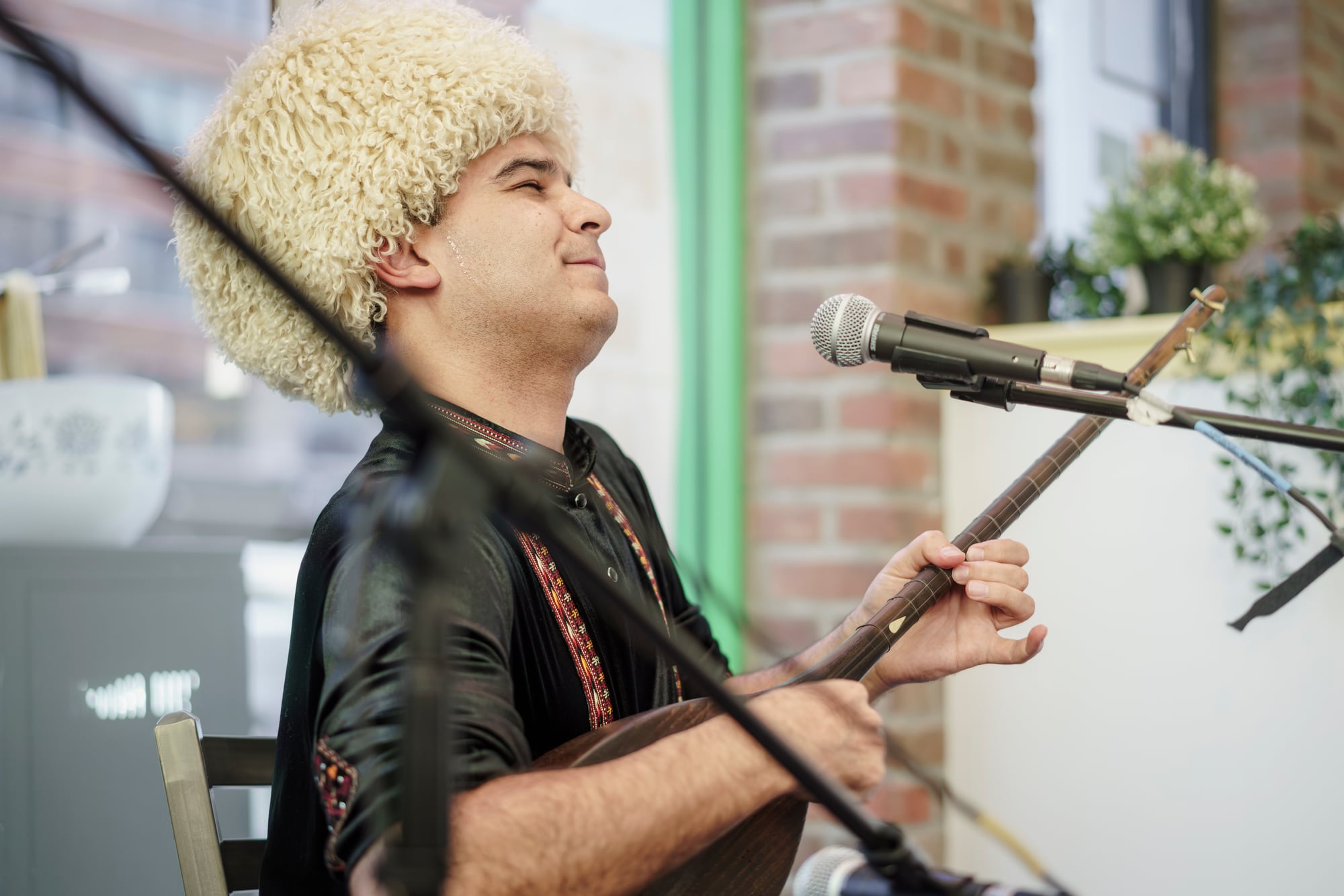
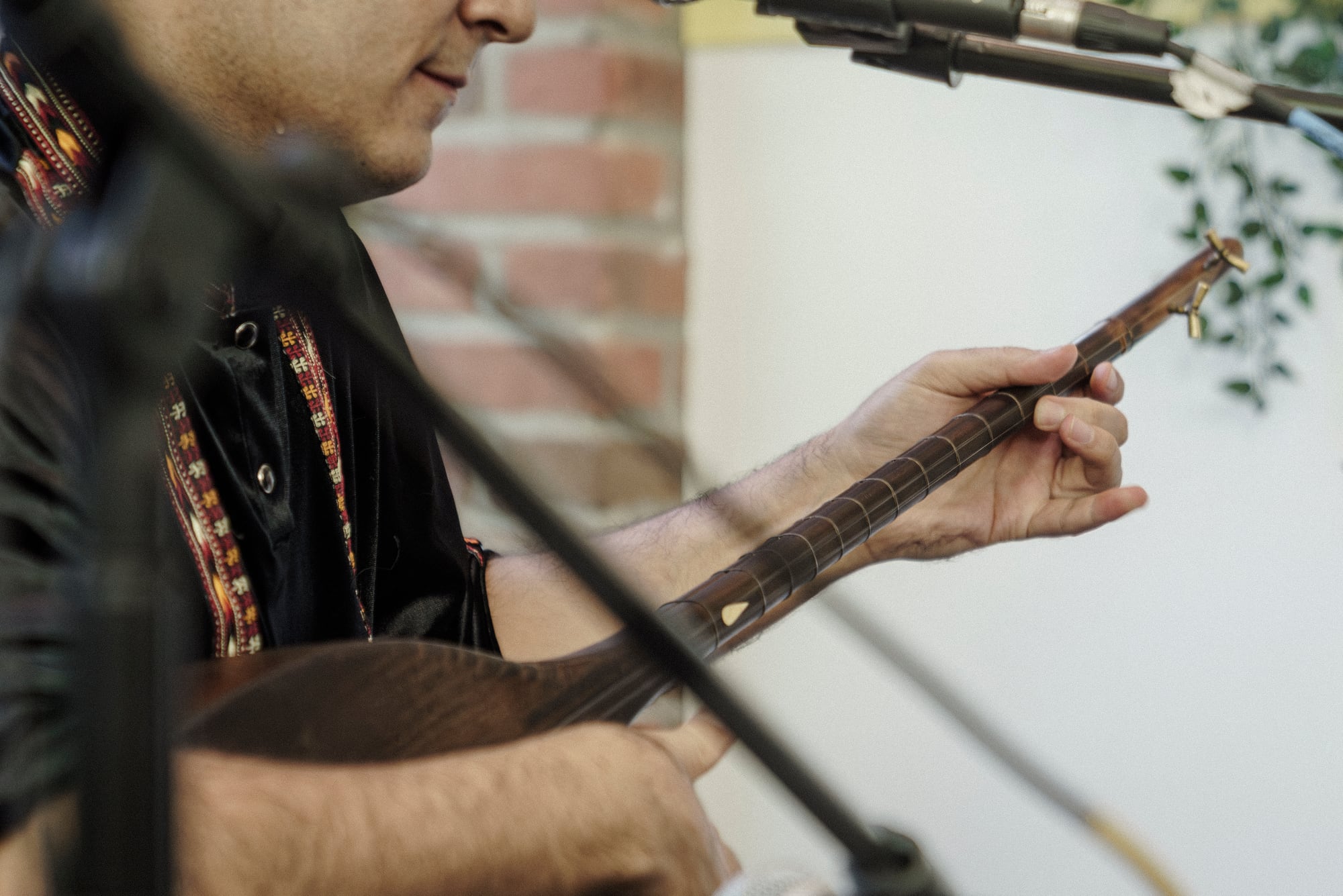
At the heart of the bakhshi’s art is the dutar, whose warm, penetrating tone accompanies both spoken narrative and song. In the hands of a master, the instrument becomes an extension of the voice, supplying rhythmic drive, melodic ornamentation, and subtle expressive cues. A hallmark of bakhshi singing is guttural embellishment, a distinctive resonance that heightens emotional intensity at climactic moments and is instantly recognizable across the Turkmen world.
A bakhshi’s repertoire encompasses heroic epics recounting legendary feats; meditative songs of love, longing, and spiritual reflection; and festive pieces performed at communal celebrations. The title “bakhshi” is traditionally not self-assumed but bestowed by respected elders or a council of master musicians, recognizing a performer’s knowledge, artistry, and moral standing.
Oghlan Bakhshi
This program features Oghlan Bakhshi (Mohammad Geldi), one of the leading torchbearers of Turkmen bardic music in the United States. Born and raised in the Turkmen community of Gonbad-e Kavoos in northeastern Iran, a region renowned for its vibrant Turkmen cultural life, he trained from childhood under prominent bakhshi masters. At the age of ten, he was ceremonially recognized as Oghlan Bakhshi, meaning “child bard,” an honorary title granted by a council of Turkmen elders in acknowledgment of his prodigious talent and early mastery of the tradition. Before him, this distinction had been bestowed on only one other person, underscoring both its rarity and the community’s extraordinary confidence in his artistic future.
Oghlan Bakhshi has brought Turkmen music to wider audiences through performances at festivals and world-music platforms across Asia, the Middle East, Europe, and North America. His recent album, Journey Across the Steppes, was selected as one of the Top 100 World Music Albums of 2023–2024 by the Transglobal World Music Chart, further establishing him as an important international ambassador of Turkmen musical heritage.
At Beef Up Noodle, he presents a wide-ranging program drawn from the Turkmen bardic repertoire, including several pieces he has never performed in New York. The concert highlights both romantic and heroic epics, songs set to contemporary poetry, and expressive instrumental works for the dutar that evoke the soul of Turkmen nomadic culture. Through these songs and stories, listeners encounter the remarkable depth, beauty, and regional diversity of Turkmen musical traditions.
Photographs
Credits
- Curator
- Mu Qian @mu.qian.1
- Producer
- Shi Qianyi eveshi@seeandsea.org
- Poster design
- Haolun Liu @lhl_bicycle
- Sound engineer
- Kaiwei Yip @yippeekaiwei
- Photography
- Tao Ho @toseiho
With thanks to
- Barbash Family Fund
- New York Chinese Opera Society Inc
- Neurocrine Biosciences, Inc.
Presented by See See Records, the record label of See & Sea Culture Foundation, a 501(c)(3) non-profit organization.