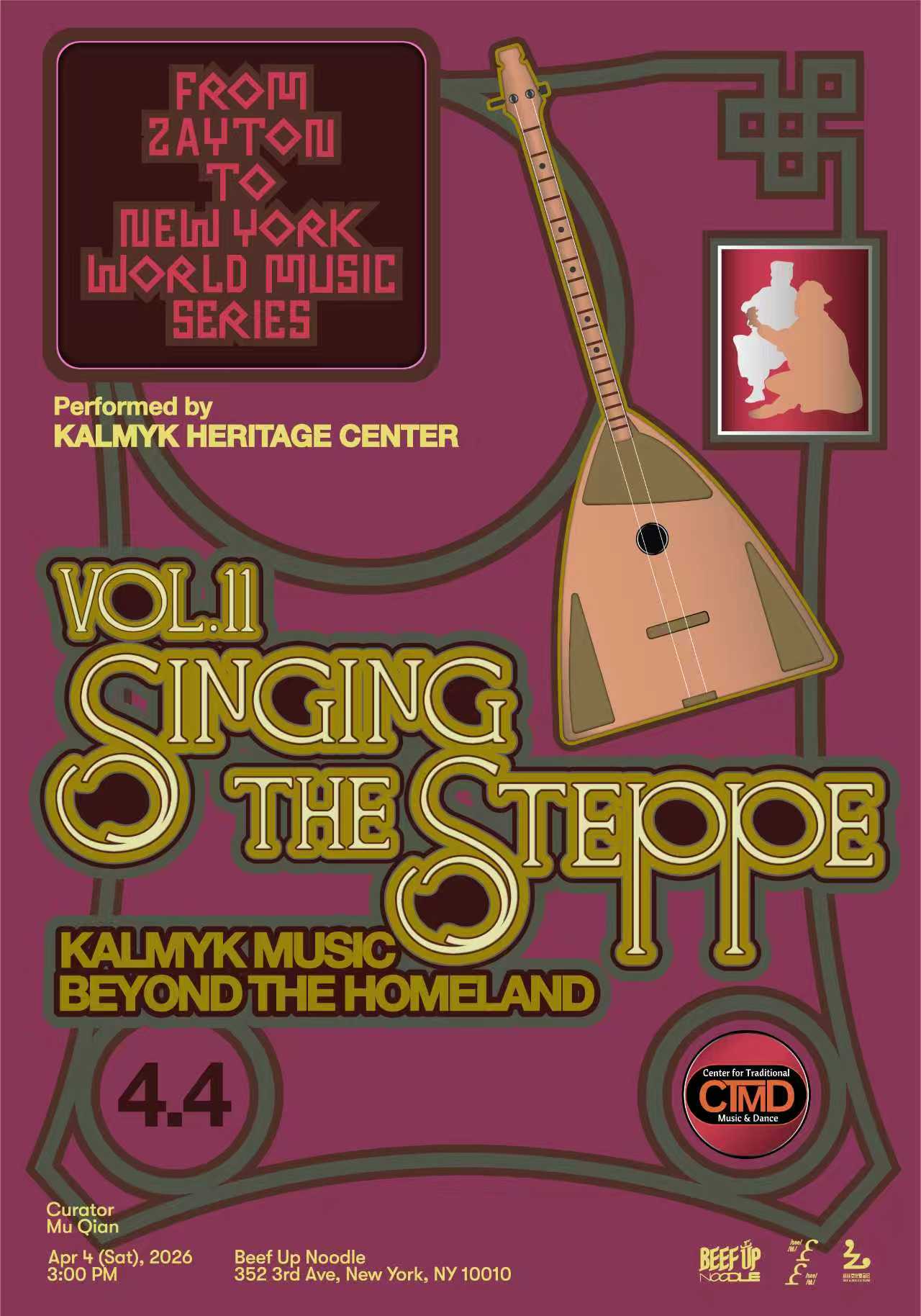
From Zayton to New York · Vol. 11
Singing the Steppe: Kalmyk Music Beyond the Homeland
- Date
- Saturday, April 4, 2026
- Time
- 3:00 PM
- Venue
- Beef Up Noodle
352 3rd Ave, New York, NY 10010 - With
- Kalmyk Heritage Center
- Presented by
- See See Records & Center for Traditional Music and Dance
Co-presented with
We are proud to partner with the Center for Traditional Music and Dance to co-present From Zayton to New York concert series featuring New York-based immigrant artists.
To learn more about the Center for Traditional Music and Dance visit: www.ctmd.org.
CTMD's funders
This program is presented with the support of the Laurie M. Tisch Illumination Fund, the Howard Gilman Foundation, and the Samuels Foundation.
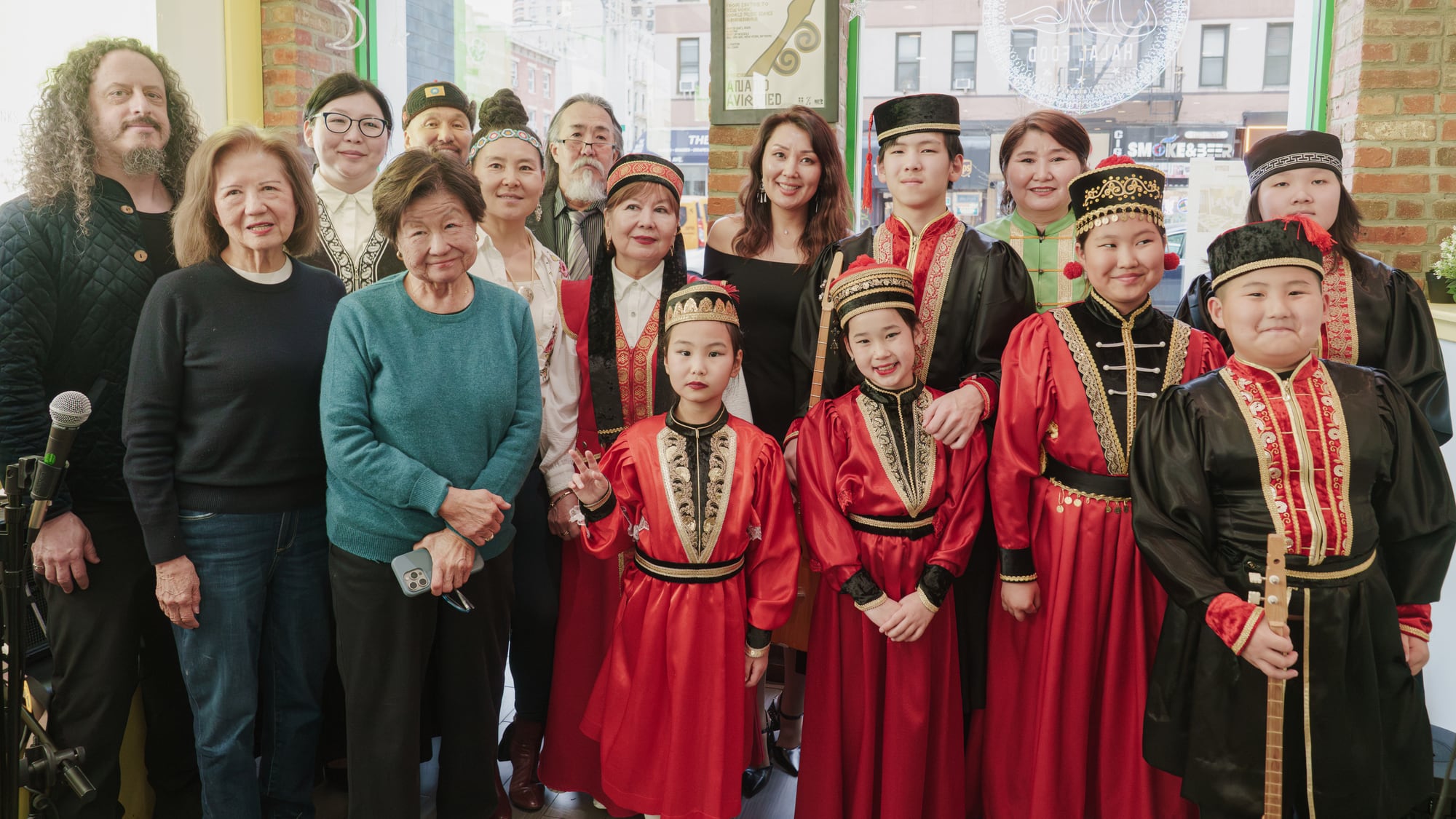
The living musical traditions of the Kalmyk people, centered on the dombra and vocal traditions, with multi-generational performers from Russia, China and the United States.
Cultural context
The Kalmyks are descendants of the Oirats, a Western Mongol confederation whose migrations since the fifteenth century have shaped a transregional cultural landscape across Russia, Mongolia, China, and Central Asia. Today, approximately 300,000 Kalmyks live worldwide, around 3,000 of whom live in the United States. Their language is classified as endangered by UNESCO, and the preservation of cultural identity remains an urgent concern.
Kalmyk society is traditionally organized around four major lineages, Torgut, Derbet, Khoshut, and Buzav, and is historically rooted in Tibetan Buddhism (Gelug tradition). The community maintains the Todo Bichig script and the epic Jangar, a cornerstone of Kalmyk oral heritage.
In the United States, the Kalmyk Heritage Center serves as a central cultural organization dedicated to sustaining Kalmyk identity through community events, education, and artistic practice. This concert reflects ongoing efforts within the community to transmit musical knowledge across generations while re-situating steppe traditions within contemporary diasporic life.
Program overview
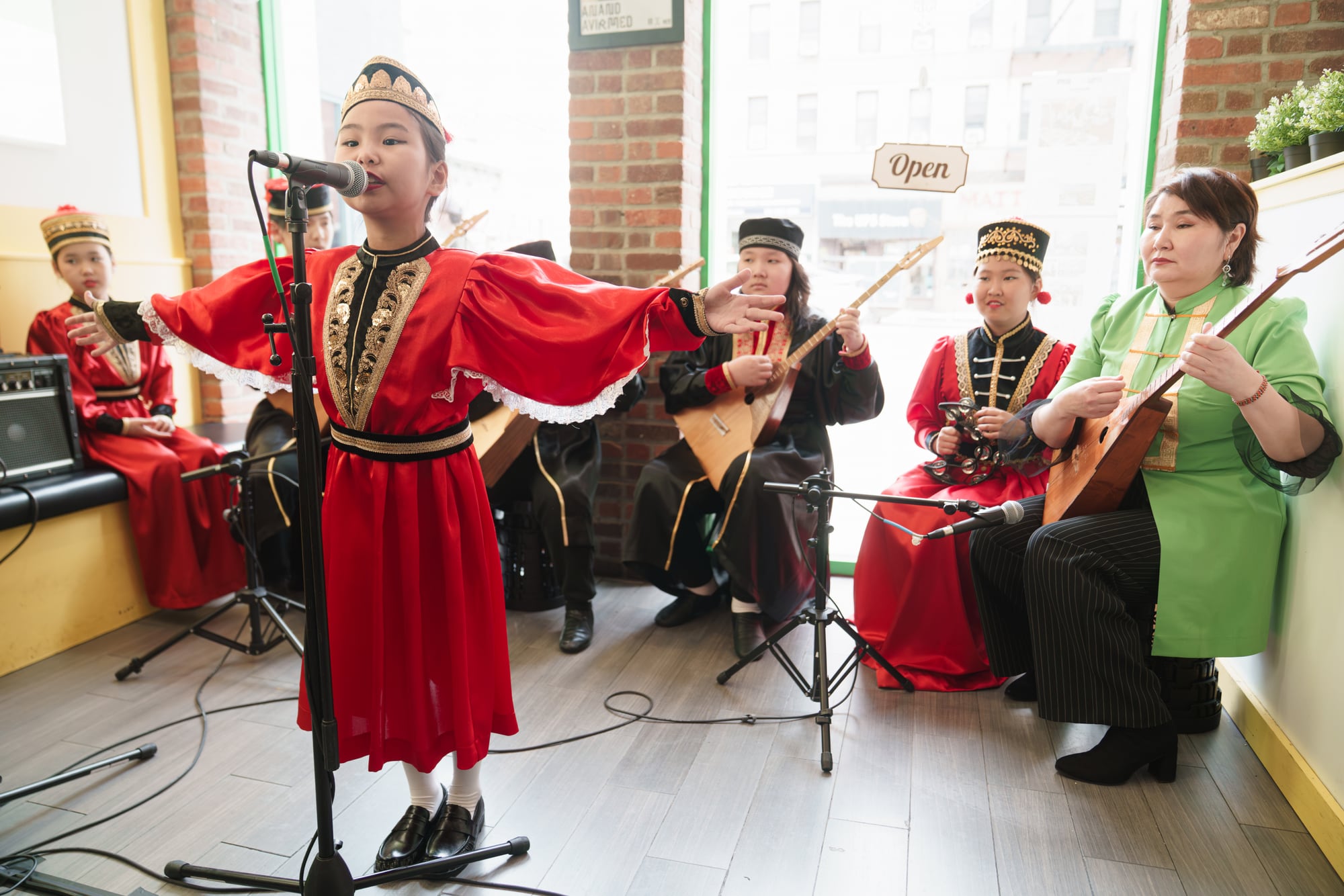
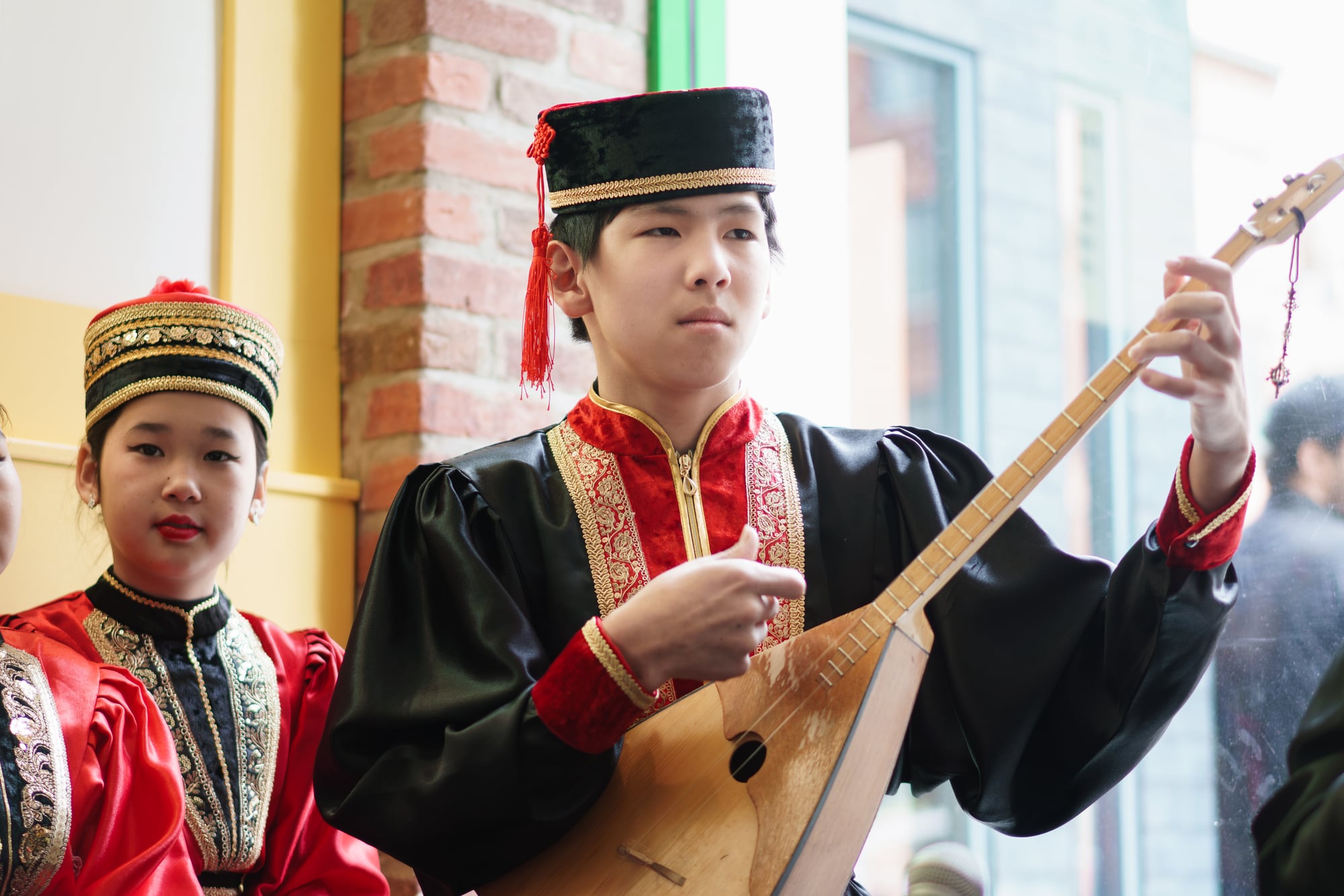
This concert presents the living musical traditions of the Kalmyk people, centered on the dombra and vocal traditions. Bringing together multi-generational performers from diverse geographic backgrounds, including Russia, China, and those born in the United States, the program demonstrates how music functions as a medium of lineage, memory, and cultural continuity beyond the homeland.
Kalmyk music emerges from a nomadic worldview in which sound accompanies storytelling, ritual, and everyday life. Instrumental performance and song operate as interwoven expressive forms. Through epic resonance, lyrical song, and dance melodies, music articulates relationships between people, land, and spiritual practice.
Musical traditions
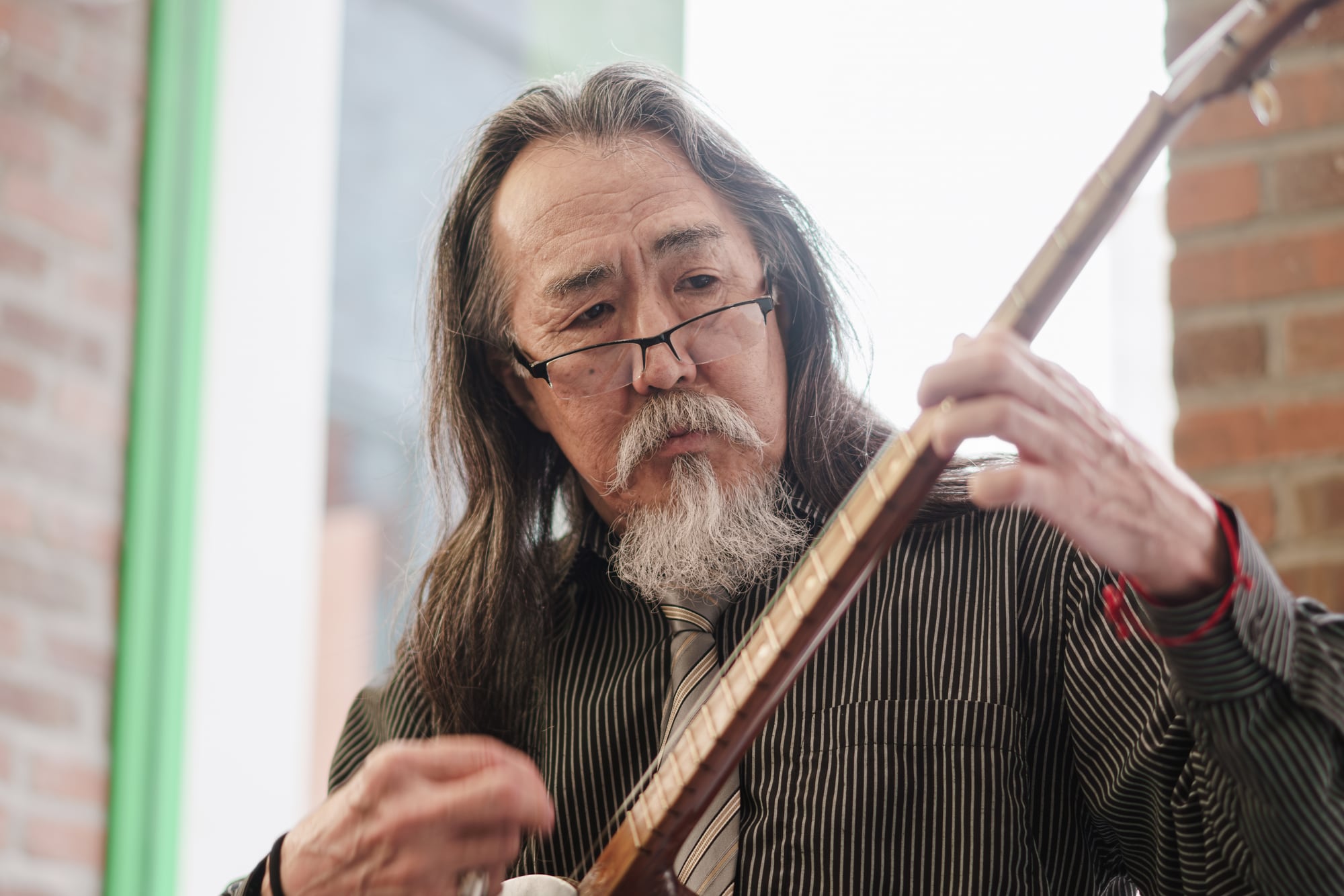
The dombra, a two-stringed plucked lute, occupies a central role in Kalmyk musical life. With its distinctive triangular body and resonant soundboard, it accompanies storytelling, epic performance, and communal gatherings. Historically, it was played by jangarchi, epic singers of the heroic cycle Jangar, as well as in ritual and festive contexts. Its portability and expressive range made it a primary vehicle for transmitting oral tradition.
Kalmyk vocal music includes both epic and lyrical genres. Among the oldest forms are ut dun (“long songs”), which encompass wedding songs, historical ballads, pastoral invocations, and Buddhist devotional repertoires. A nineteenth-century manuscript preserved in St. Petersburg documents over one hundred Kalmyk songs in the Oirat clear script (todo bichig), reflecting a rich historical repertoire of religious hymns and songs of migration, war, and memory.
Today, these traditions face challenges due to language endangerment and historical displacement. Kalmyk communities worldwide continue to sustain and revive their musical heritage through teaching, performance, and intergenerational transmission.
Artists
Saglar Naiminova, dombra teacher; former head of the Kalmyk folk instruments department at a Children’s School of Arts. Laureate of the Republic of Kalmykia. Trained at the North Caucasian State Institute of Arts.
Adyan Mandzhiev, honored artist, folk performer, former soloist of the “Tulip” ensemble.
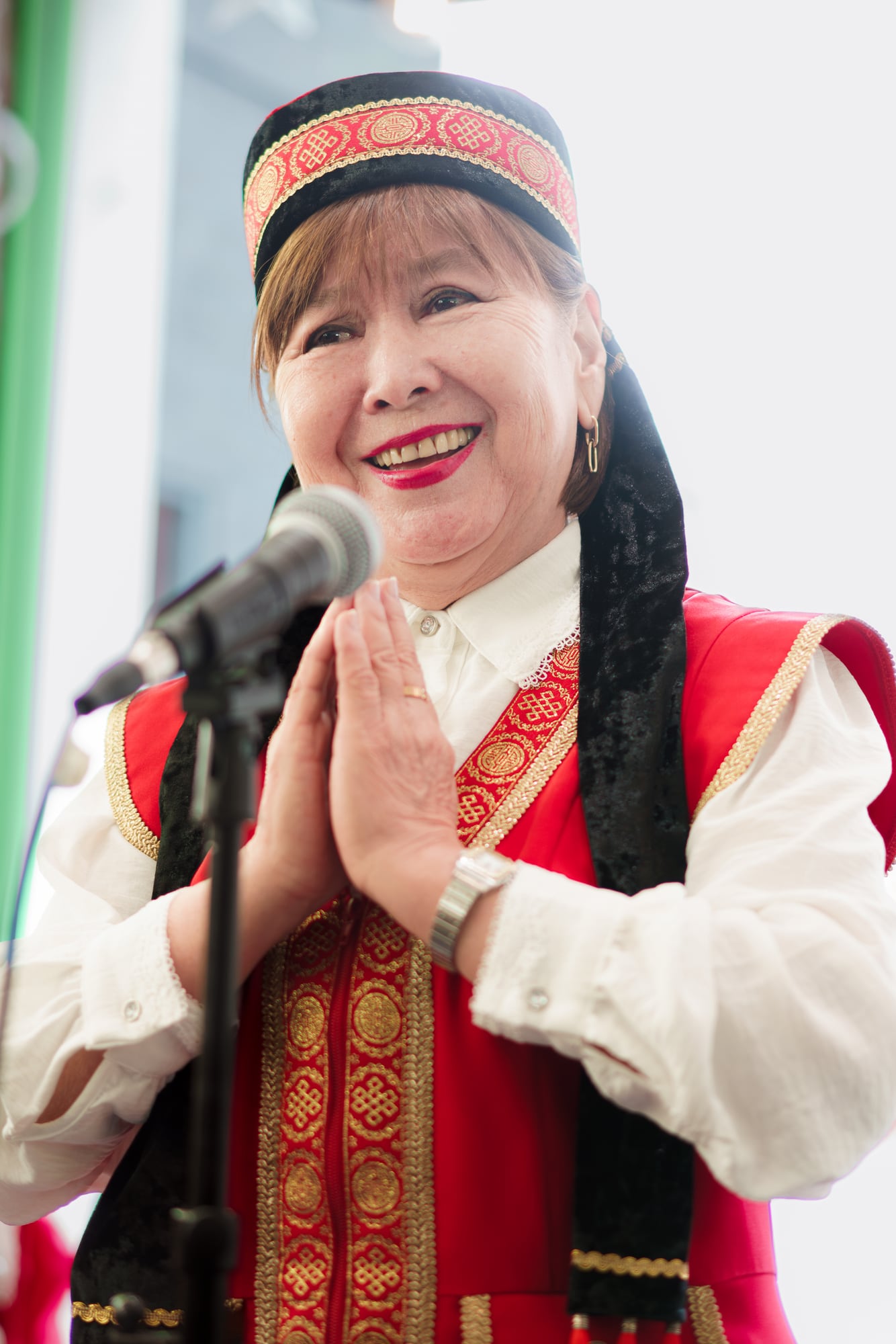
Suvda Khereid, singer from Inner Mongolia, China. Performances include the annual Chinggis Khaan Memorial Ceremony, Brooklyn Culture & Art Festival, and Brooklyn Roots Festival & Traditions at Prospect Park.
Geoff Gersh, American dombra player and guitarist, featured in the “Sounding the Steppe: Kazakh Songs & Strings” concert of the From Zayton to New York series.
With David Ochirov, Aldar Sarangov, Chingiz Tsebekov, Alisa Seratirova, Daria Ochirova, Milana Khulkhachieva, and Nadezda Lagaeva.
Photographs
Credits
- Curator
- Mu Qian @mu.qian.1
- Producer
- Shi Qianyi eveshi@seeandsea.org
- Poster design
- Haolun Liu @lhl_bicycle
- Sound engineer
- Kaiwei Yip @yippeekaiwei
- Photography
- Tao Ho @toseiho
With thanks to
- Barbash Family Fund
- New York Chinese Opera Society Inc
- Neurocrine Biosciences, Inc.
Presented by See See Records, the record label of See & Sea Culture Foundation, a 501(c)(3) non-profit organization.