From Zayton to New York · Vol. 4
Arabic Oud and Song
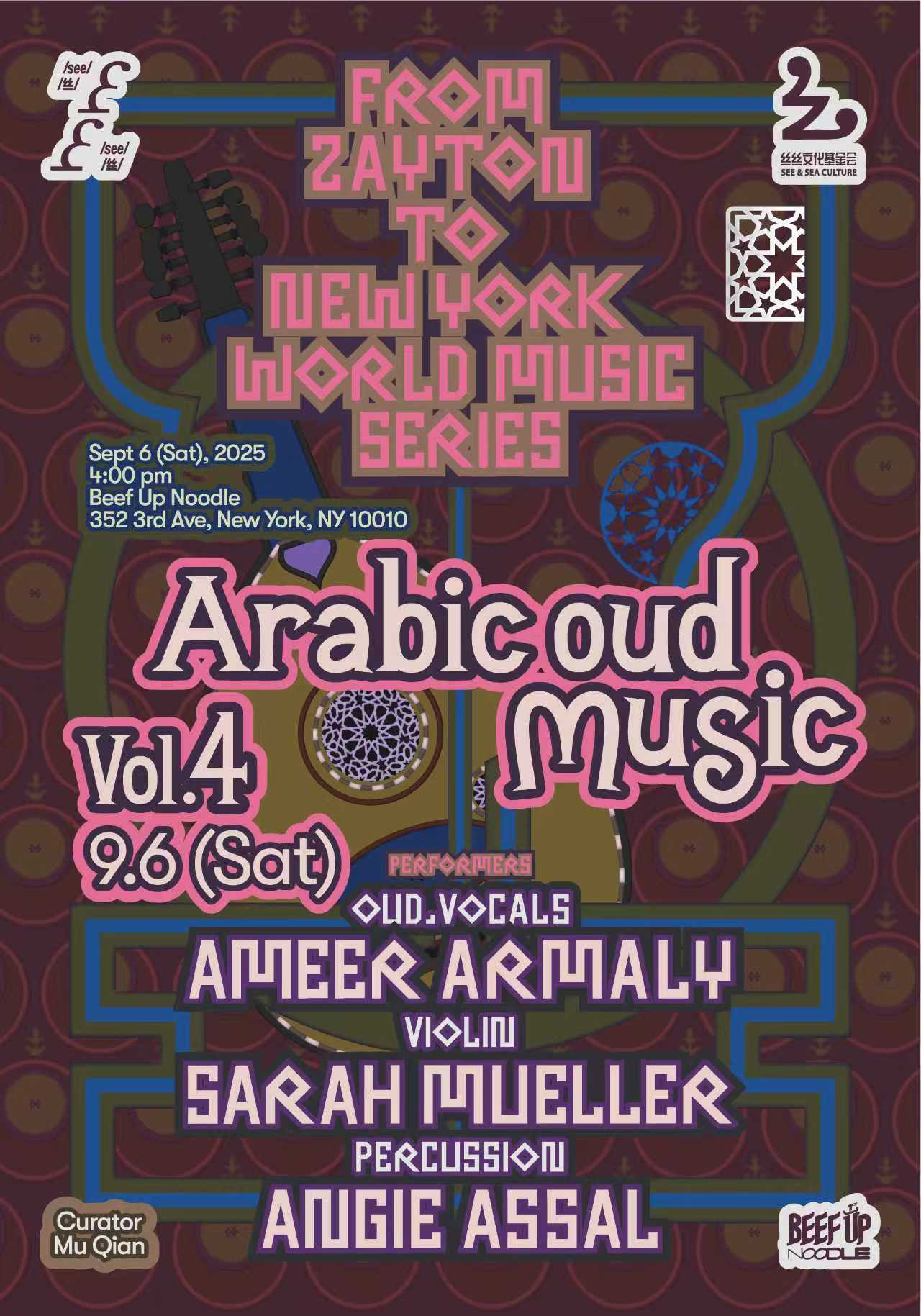
- Date
- Saturday, September 6, 2025
- Time
- 4:00 PM
- Venue
- Beef Up Noodle
352 3rd Ave, New York, NY 10010 - With
- Ameer Armaly, Sarah Mueller, Angie Assal, Mohamed Salah, Sami Salloum
- Presented by
- See See Records
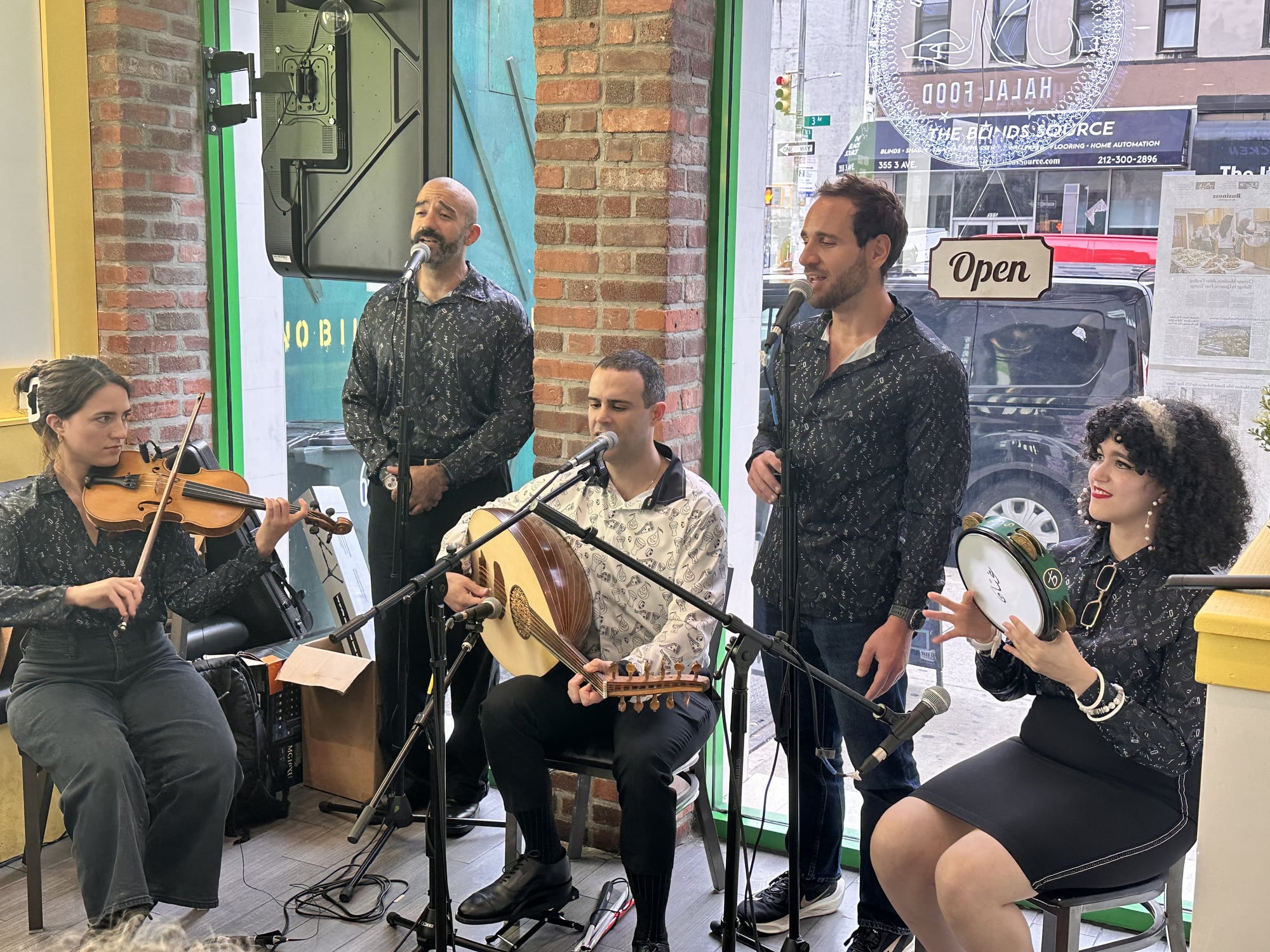
Palestinian-American oud player Ameer Armaly and friends in an afternoon of Arabic music: samai and longa from the Ottoman era, the muwashah of Andalusia, and early 20th-century instrumental compositions.
Curator’s note
Join Palestinian-American blind oud player Ameer Armaly and his friends for an evocative afternoon of Arabic music. The program highlights classical instrumental forms such as the samai and longa, whose origins trace back to the Ottoman era, as well as vocal forms like the muwashah, a richly structured poetic and musical tradition that dates as far back as Andalusia.
The concert also explores popular instrumental compositions from the early 20th century, reflecting a period of transformation and innovation in Arabic music. Throughout the performance, improvisation, a cornerstone of the Arabic musical tradition, will serve as a connective thread, bringing the repertoire to life with spontaneity and emotional depth.
Historical context of Arabic music
Arabic music is built on the maqam system, sets of melodic modes that give each piece its mood and color, and on rhythmic cycles known as iqa‘at. A distinctive feature is the use of microtones (pitches between the notes of the Western scale), which give the music its unique expressiveness. Improvisation (taqsim) is another cornerstone: musicians shape spontaneous melodies within the framework of a maqam, bringing personal emotion into the performance.
Andalusia. In medieval Andalusia (southern Spain), Arabic music flourished at the courts of Córdoba and Granada. It was here that poetic-musical forms such as the muwashah were born, blending refined Arabic poetry with elegant melodies. This repertoire later spread across North Africa, where it continues to shape classical traditions today.
The Ottoman era. From the 14th to 20th centuries, the Ottoman courts of Istanbul became vibrant centers of musical exchange. Here, Arab and Turkish musicians developed instrumental forms such as the samai (often in a 10/8 rhythm) and the lively longa. These compositions remain staples of the Arabic classical repertoire and are still performed in concerts today.
The oud. The oud, often called the “king of Arabic music”, is the central instrument of this tradition. With deep roots reaching back over a thousand years, the oud not only shaped Arabic musical theory but also influenced instruments worldwide, from the European lute to the Chinese pipa. Its warm, resonant tone, close to the human voice, makes it a natural vehicle for both composed pieces and improvisation.
Performers
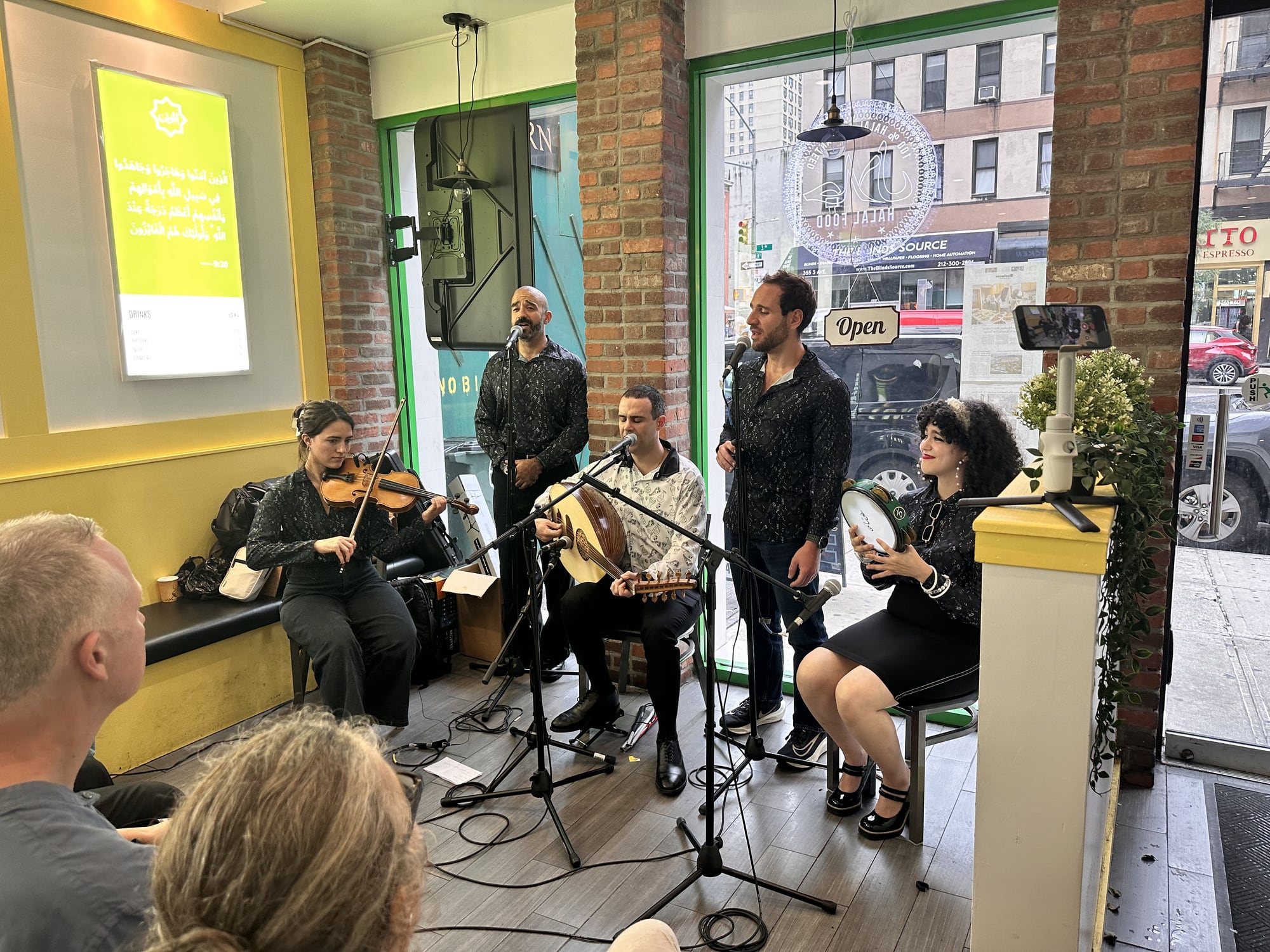
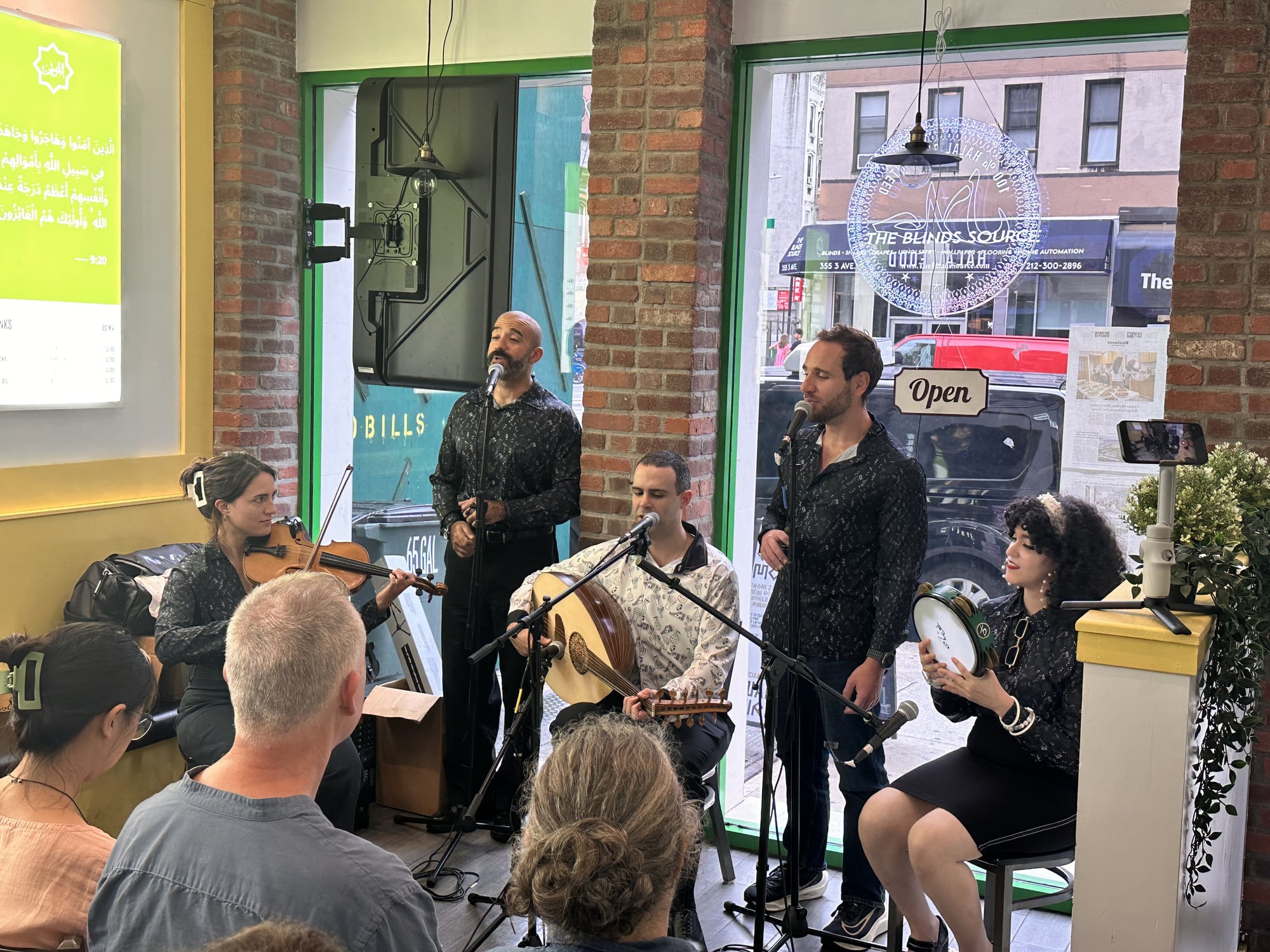
Ameer Armaly (oud, vocal), Mohamed Salah (vocal), Sami Salloum (vocal), Sarah Mueller (violin), Angie Assal (percussion).
Ameer Armaly was born in South Carolina and exposed to Arabic music from an early age through his uncle who played the oud. He then went on to study under Simon and Najib Shaheen. Ameer leads an Arabic music ensemble which performs regularly around the New York area, cultivating local talent and reviving the great Arabic songs of the twentieth century.
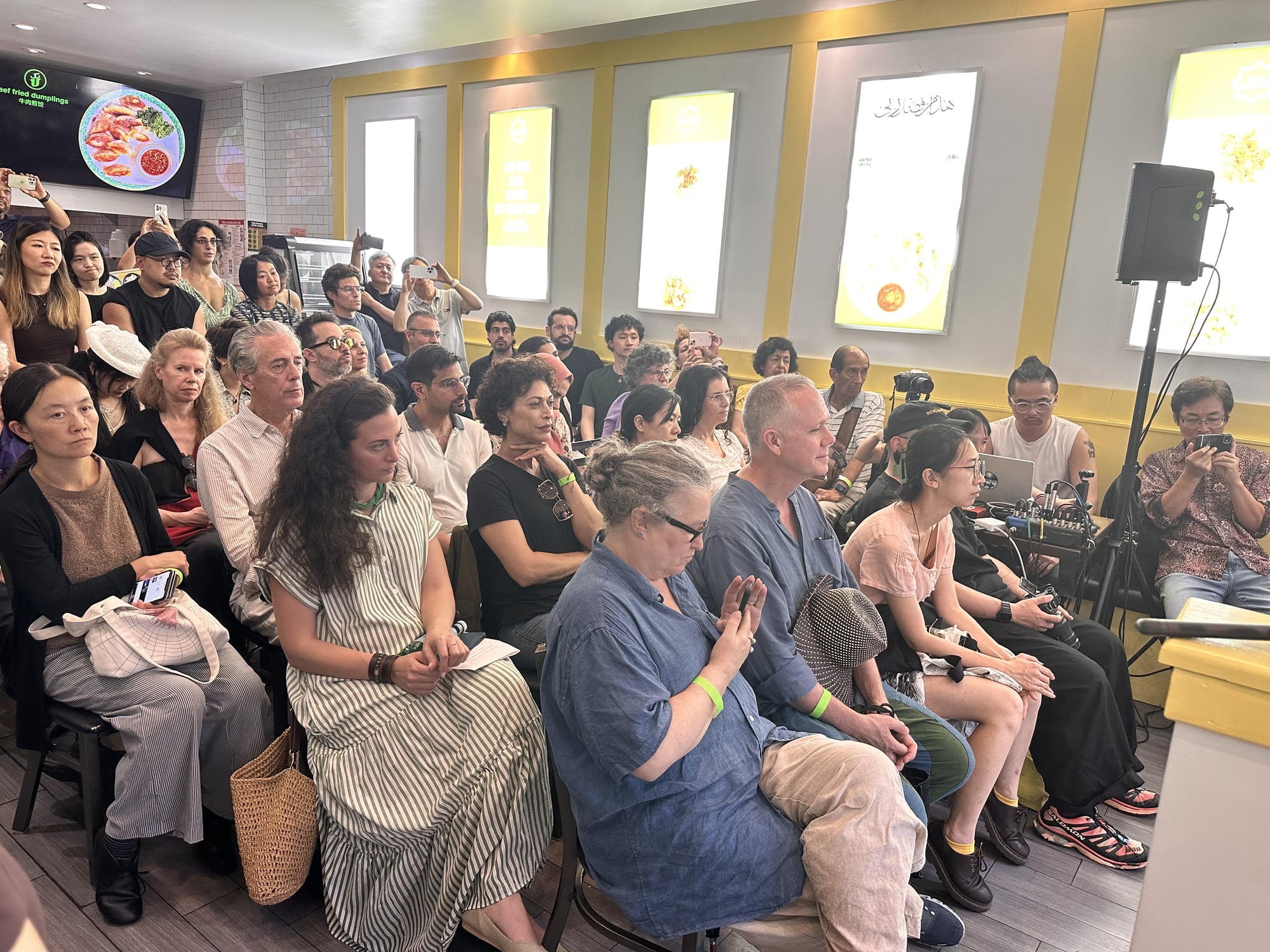
Photographs
Credits
- Curator
- Mu Qian @mu.qian.1
- Producer
- Shi Qianyi eveshi@seeandsea.org
- Poster design
- Haolun Liu @lhl_bicycle
- Sound engineer
- Kaiwei Yip @yippeekaiwei
- Photography
- Shi Qianyi eveshi@seeandsea.org
With thanks to
- Barbash Family Fund
- New York Chinese Opera Society Inc
Presented by See See Records, the record label of See & Sea Culture Foundation, a 501(c)(3) non-profit organization.